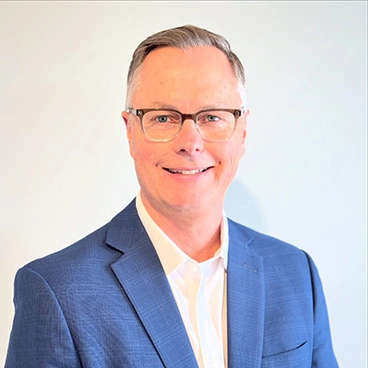
Elise May
Senior Program Manager of Transportation Safety
As Senior Program Manager of Transportation Safety at UL Standards & Engagement, Elise May supports the Thermal Runaway Incident Program (TRIP), focused on mitigating lithium battery incidents across the transportation sector. In her role, she applies more than 35 years of aviation expertise toward cabin safety, risk management, regulatory compliance, and lithium battery safety standards and advocacy.
Previously, Elise served as Senior Program Manager of Inflight Safety & Regulatory Compliance at Southwest Airlines, where she investigated incidents, accidents, injuries, and compliance concerns; facilitated crew debriefs that helped drive operational improvements; and conducted risk assessments for new procedures and ineffective controls. She also created and managed Southwest Airlines’ Inflight Aviation Safety Action Program (ASAP) and Inflight Fatigue Risk Management Program, overseeing program development, training, education, communication, and continuous improvement. She has represented Southwest Airlines as Chairperson of the Airlines for America Cabin Operations Committee and Co-Chair of Aviation InfoShare. Her aviation career also includes experience as a domestic and international flight attendant and Inflight Training Facilitator.
A recognized cabin safety subject matter expert, Elise has authored numerous safety articles and presented at domestic and international industry events. Elise’s work has appeared in Yahoo, AOL, Airways Magazine, Flight Safety Foundation, and other industry publications.
Elise holds a Bachelor of Arts in Organizational Speech Communications from the University of Texas at Arlington, and a certification for Accident Investigation from the National Transportation Safety Board (NTSB).
We had the chance to sit down to get to know Elise better. Learn more about her experience and how it’s defining her approach to working for a safer, more sustainable world.
Q: Elise, tell us a little about yourself and your role at UL Standards & Engagement. What does your work focus on day-to-day?
A: Currently, I am working on TRIP, our Thermal Runaway Incident Program, which is a network of more than 50 passenger and cargo airlines that provide detailed information on lithium-ion battery incidents across the industry. This equips the aviation industry to better understand the extent of the problem and develop mitigation to help prevent future incidents.
My work includes educating airlines, conducting outreach to carriers, and encouraging their participation and data sharing. I’m also helping to plan the TRIP Summit by developing agenda items, securing speakers, and supporting the overall effort. More broadly, I travel to conferences to represent ULSE and TRIP while meeting people across the industry in this new role.
Q: You’ve spent more than 35 years in the aviation industry. How has the industry’s approach to safety evolved during your career?
A: It has evolved tremendously from the time I started working in the aviation industry. Numerous safety and voluntary reporting programs have been introduced and are essential. These programs encourage employees to report issues the airline might not otherwise know were occurring without the fear of retribution. This allows employees to share information that they probably would not have shared in the past.
We also saw Safety Management Systems (SMS) introduced across the industry. Every carrier now runs new procedures and risks through its SMS to help make travel safer. Industry partners, including organizations like UL Standards & Engagement, the International Air Transport Association (IATA), and the International Civil Aviation Organization (ICAO), support carriers and help drive industry-wide changes rather than changes at individual carriers.
Q: You’ve investigated incidents, accidents, injuries, and compliance concerns in aviation. What have those experiences taught you about building a strong safety culture?
A: My experience has reinforced that a strong safety culture is incredibly important. You have to earn the trust of employees so that, when you conduct investigations, they will share honest feedback and information with you. That trust is vital to any investigation.
It is also very important to close the loop on these investigations. Once you’ve completed the interviews, gathered the information, determined a root cause, and hopefully identified ways to prevent the same thing from happening again, you need to share that information with the individuals involved. In many cases, it is also important to share the findings with the entire work group so that everyone understands the work behind the investigation and its outcome.
Q: Why is industry collaboration so important in addressing thermal runaway incidents in aviation?
“When we take a united approach and implement similar policies across airlines, passengers and crews will have clear expectations, and we can create a safer environment across the board rather than addressing the issue carrier by carrier. ”
A: Industry collaboration is essential because thermal runaway incidents do not just affect a single carrier; they affect the entire industry. We need a united approach to mitigation. You don’t want one carrier to implement a policy while another carrier has completely different rules. That is confusing for the traveling public because passengers don’t know what to expect when traveling on various airlines.
When we take a united approach and implement similar policies across airlines, passengers and crews will have clear expectations, and we can create a safer environment across the board rather than addressing the issue carrier by carrier.
Q: Looking ahead, what emerging trend or safety challenge in aviation deserves more attention?
A: Right now, I would say one of the greatest risks is lithium-ion batteries and the thermal runaway incidents that can occur when devices are not transported correctly. There is still a lot of work to be done in this area. As an industry, we need to work together. We also need assistance from regulators and continued education for customers.
Lithium-ion batteries present a growing challenge. The batteries keep getting larger, and that is not going to change. People are traveling with more battery-powered products, not fewer, so we have to be able to keep up with that risk.
Q: What’s one safety tip that most travelers don’t know but need to?
A: Every traveler needs to understand: even though you are one person, your choices matter. When we ask, for example, if there are lithium-ion batteries in a bag, a person may not always answer honestly because they think, “I’m one person. What can happen with my one battery?”
Travelers need to know that it only takes one individual, and one battery, to cause an incident. When you have 300 people on a plane, every individual matters, everything in their luggage matters, and proper storage matters — keeping devices (especially power banks and portable chargers) within arm’s reach rather than in the overhead bins — is critical for mitigating incidents.
We also need to continue educating people and use terms they understand. Some passengers may not even know what a lithium-ion battery is, even while traveling with several of them in rechargeable devices. Additionally, travelers need to know that the cabin crew is well trained to handle thermal runway situations, and the best thing they can do to help is to let the cabin crew respond accordingly. Sometimes, well-intentioned passengers get involved to help, but they can actually hinder the cabin crew’s ability to react to the issue.
In the event of a thermal runaway incident, travelers should notify the cabin crew and then simply step aside and let them handle the situation.
Hear From Our Experts
“Travelers need to know that it only takes one individual, and one battery, to cause an incident. When you have 300 people on a plane, every individual matters, everything in their luggage matters, and proper storage matters — keeping devices (especially power banks and portable chargers) within arm’s reach rather than in the overhead bins — is critical for mitigating incidents.”
Elise May
Senior Program Manager of Transportation Safety