Late one night this March, a lithium-ion battery in an electric scooter overheated in a freshman dorm room at San Diego State University, setting off a fire that triggered sprinklers and forced an hours-long evacuation. Sixteen rooms sustained water damage. One student suffered mild burns, and two others were treated for smoke inhalation.
That fire came less than six months after 15 students were displaced at East Carolina University, where a lithium-ion battery in an electric skateboard sparked a fire in a dorm, causing fire, smoke, and water damage that impacted eight rooms.
Those are just two examples of the increasing number of fires involving micromobility devices like electric bikes, scooters, and skateboards occurring on college campuses. The devices are powered by lithium-ion batteries, which can catch fire or explode when poorly made, mishandled, or damaged, and the Center for Campus Fire Safety cites 23 incidents since 2023.
The SDSU and ECU fires occurred even though both schools prohibit storing or charging these devices in dorm rooms (a policy intended to prevent potential tragedy). But with the devices quickly becoming the transportation mode of choice for students, the reality is that bans don’t work. And that leaves colleges and universities scrambling to keep up.
The Race to Keep E-bikes and E-scooters Safe and Available for Students
I first became aware of this issue in 2024 at a conference hosted by the League of American Bicyclists, where representatives from several schools all voiced a similar refrain: “What do we do about e-bikes on campus? We need advice on safe policies to prevent banning them.”
Of colleges and universities surveyed said students were charging e-bikes and e-scooters in dorms
At UL Standards & Engagement, we decided to take a look. Working with the League, we surveyed 75 colleges and universities.
What we found was eye-opening: While 70% had concerns about safety, only 9% had a comprehensive e-bike policy in place, and even fewer offered parking, training, or charging stations. Meanwhile, two-thirds (63%) said students were charging e-bikes and e-scooters in dorms along with 41% in academic buildings and 33% in administrative buildings. (One fire this spring occurred in a Yale robotics lab).
That was the “aha!” moment. Schools didn’t just need guidance; they needed a practical solution they could use immediately.
So we built one.
A Model for Safety, Available to Any School
Working with MIT, Virginia Tech, Arizona State, Stanford, Ohio State, and the Center for Campus Fire Safety, we looked at what should be in an e-mobility policy, what has been done, what works, and what doesn’t (research that could take an individual school months to conduct).
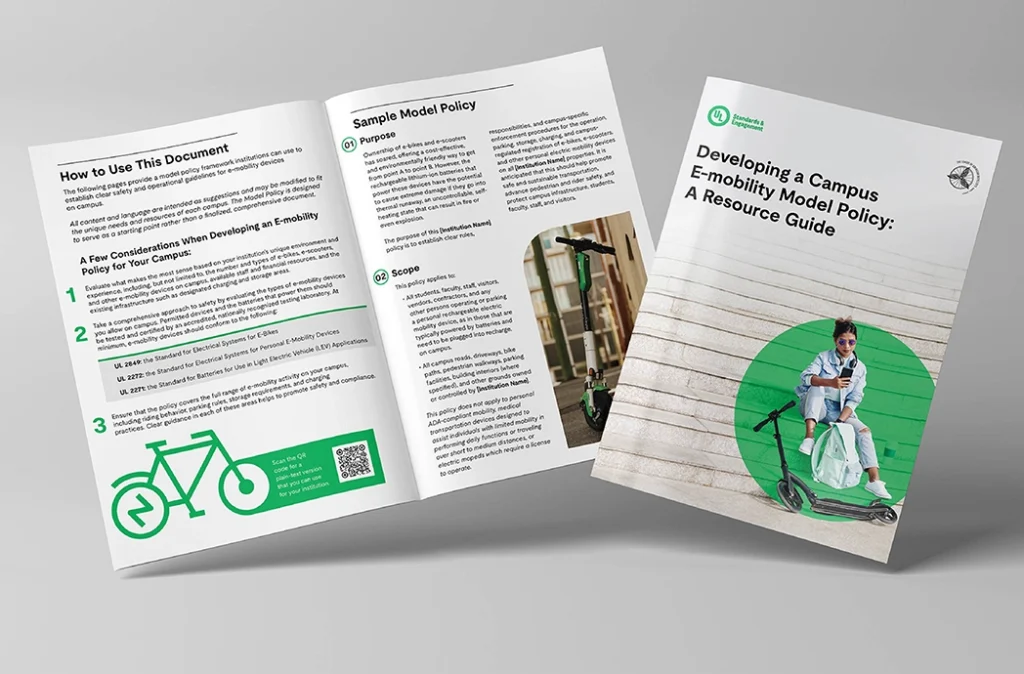
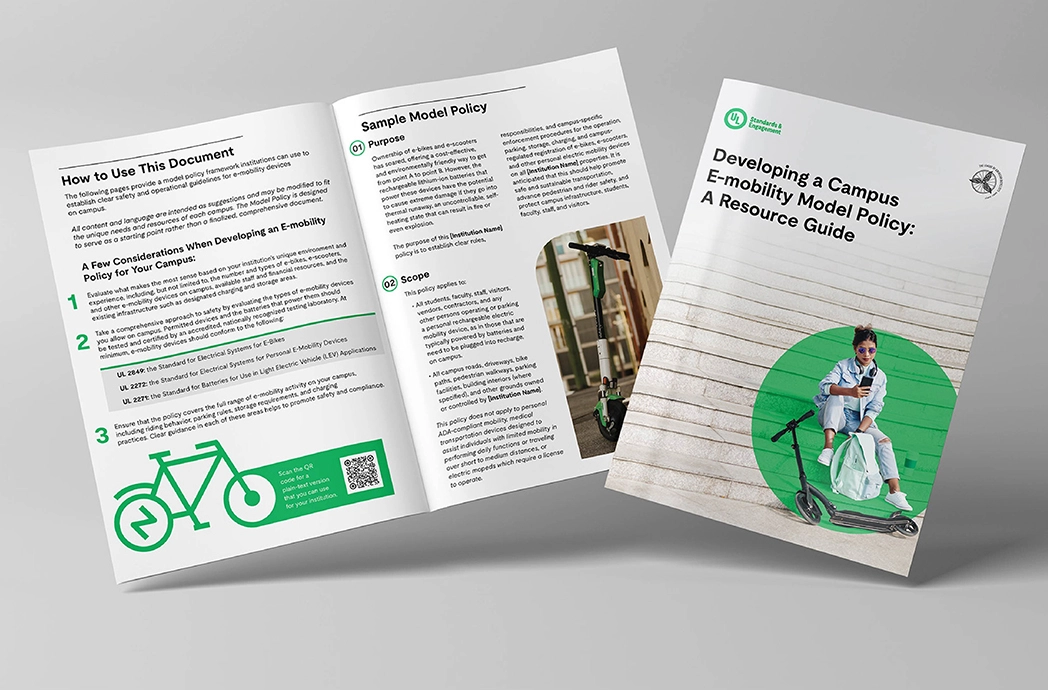
Based on that, last month we released a comprehensive new model policy designed to cover every critical element; it includes definitions, education, safer charging, storage facilities, rules, registration, enforcement, info on ULSE standards, and more. The document is free and available for any school to download and customize as it develops its own e-mobility safety policy. It’s adaptable, but also ready to go for schools in need of a policy right away. Any institution can literally fill in the blanks, run down the included checklists, and enact a policy virtually overnight.
While some campuses have tried to ban these devices, we’ve discovered that this actually does little to prevent students from using these devices. The better approach is to meet them where they are with clear, enforceable policies and the right infrastructure.
Instead of hitting the brakes on micromobility, schools need to speed up their efforts to put the proper signs, signals, and guardrails in place. The ULSE/LAB Campus E-mobility Model Policy and Guide does just that. Download it today to help make your campus safer.