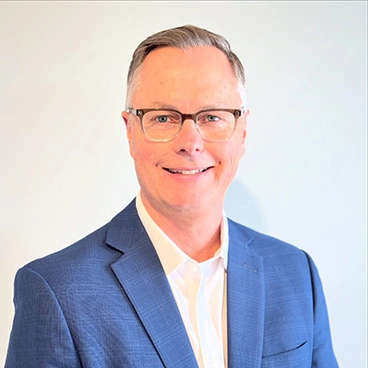
Bob McClelland
Senior Program Manager of Transportation Safety
Bob McClelland is an aviation safety professional, with over two decades of leadership experience in air cargo operations, regulatory collaboration, and hazardous materials management. Bob retired from UPS Airlines in March 2024 after a distinguished 34-year career, most recently serving as Managing Director of Safety, Compliance & Dangerous Goods. In that role, he led five major divisions and was instrumental in embedding a robust Safety Management System across the airline. His leadership was especially critical during the COVID-19 pandemic, when he helped secure FAA confidence to transport large volumes of dry ice for vaccine distribution.
From 2003 to 2017, Bob served as UPS’s Dangerous Goods Director, where he led lithium battery safety initiatives, supported the NTSB’s investigation into UPS Flight 6, and represented UPS at global forums including IATA and ICAO. He also led the airline’s 24/7 hazardous materials helpdesk, handling over 250,000 calls annually.
In 2025, Bob transitioned to UL Standards & Engagement as Senior Program Manager, Transportation Safety, continuing his mission to improve safety across the transportation landscape. His current work is informed by his leadership on the U.S. DOT’s Lithium Battery Air Safety Advisory Committee, where he introduced the Thermal Runaway Incident Program’s capabilities, and his involvement in a Transportation Research Board study on dry ice transport. He holds a BBA in Marketing from the University of Houston and completed executive education at Emory University’s Goizueta Business School.
We had the chance to sit down to get to know Bob better. Learn more about his experience and how it’s defining his approach to working for a safer world.
Q: Bob, tell us briefly about your career and what you do today at UL Standards & Engagement?
A: I had a 34-year career at UPS, and I like to say I started from the ground up. I was loading trailers while still in college, then got hired full time as a driver. I worked my way through a number of positions, and in 2000, I moved to Louisville, Kentucky, home of UPS Airlines, which eventually led me into dealing with dangerous goods and airline safety — how pilots fly, how mechanics maintain aircraft, how ground handlers load them. Moving to ULSE was a natural transition because I had worked with members of the ULSE team on the potential dangers of lithium-ion batteries as far back as 2017.
Q: What do you see as the biggest air cargo safety risk today?
A: The biggest air cargo safety risk today is posed by lithium-ion batteries, which can go into a state called thermal runaway which can lead to smoke, fire, or even explosion if they aren’t properly handled or manufactured. That’s been a threat for more than 15 years and it’s one that we should expect to grow in the next 15 as consumer demand rises. Consumers want these batteries because they are powerful and let them live untethered with their devices, so as more and more products rely on them, more and more are transported by air. More batteries in the air, more risk on cargo planes.
Q: What keeps you up at night when it comes to battery shipments? Is there a call you’re waiting for?
A: Unfortunately, I got that call in my previous job. When I was at UPS in 2010, we had an aircraft that tragically crashed, and we lost two pilots. While the report couldn’t determine the exact cause of the accident, it was highly suspected that lithium-ion batteries played a significant role. My concern today is: can that happen again? At ULSE, we are doing everything we can to help prevent another tragedy like that — be it on the cargo side or the passenger side.
Q: Since leaving UPS, what’s one risk that remains, and what’s a new risk you’ve identified while working here at ULSE?
“Some shippers are either unaware of regulations or rely on airlines to tell them if something is wrong, but airlines don’t have X-ray vision or a crystal ball.”
A: Lithium battery transport has improved when it comes to packaging, labeling, quantity limits, and regulatory oversight, but incidents still occur. Through ULSE’s Thermal Runaway Incident Program, we collect and analyze airline data and share it back so carriers understand not only their own trends, but also what’s happening across the industry. Lithium-ion batteries remain dangerous because of their ability to propagate heat from cell to cell, which can result in fire potentially overwhelming onboard fire suppression systems.
One newer concern is the imbalance of knowledge in the supply chain. Some shippers are either unaware of regulations or rely on airlines to tell them if something is wrong, but airlines don’t have X-ray vision or a crystal ball. They can’t see inside every box and don’t know the quality of the cells. There’s a gap in understanding and responsibility. We also continue to see substandard, low-quality batteries in the marketplace, driven by consumer demand for cheaper products.
Q: How has the risk profile changed since your time at UPS compared with today? What similarities surprise you — particularly issues that are still ongoing?
A: Regulatory knowledge and action have improved dramatically since the mid-2000s, but the system is still complex. Some shippers don’t fully understand the rules — and in some cases choose not to comply because of cost.
Q: If you could change one thing in air cargo instantly, what would it be?
A: Parties across the supply chain need to understand that they are all accountable and each has a role to play in safety, and that there must be an authority able to hold them responsible when necessary. The airlines are facing immense pressure to make sure everyone has done that job before the planes are loaded, and in many places, they don’t even know the manufacturer of the batteries, the secondary manufacturer or devices, the distributor, and so on. Stronger enforcement must be supported by enhanced education across the supply chain—more knowledge will lead to better outcomes for all parties.
Q: After 30 years with UPS, why is it important for you to remain engaged in air safety issues?
A: It’s hard to walk away from decades of accumulated knowledge. There’s a responsibility to transfer that knowledge, to help the next generation understand where we came from, what actions were taken, and what risks remain. At ULSE, I can speak with airlines around the world, manufacturers, and regulators — bridging gaps and helping move safety forward.

Hear From Our Experts
“At ULSE, I can speak with airlines around the world, manufacturers, and regulators — bridging gaps and helping move safety forward.”
Bob McClelland
Senior Program Manager of Transportation Safety