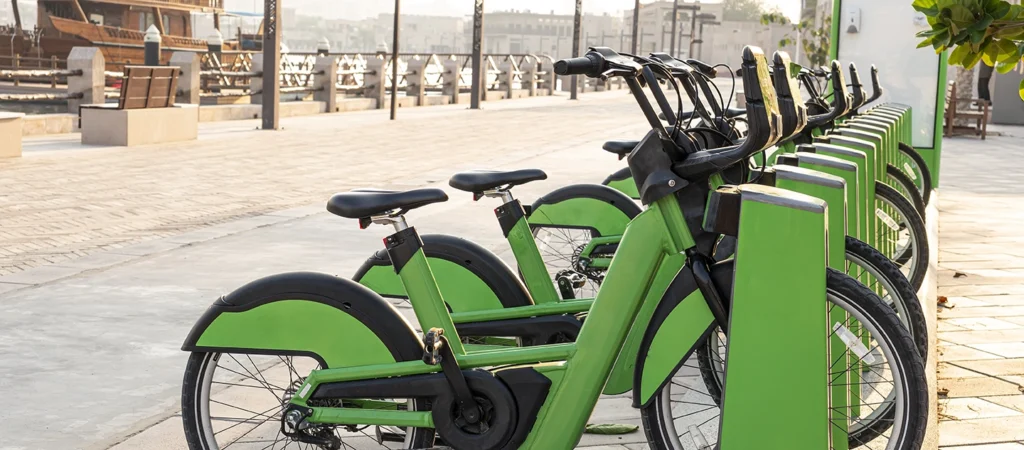
E-mobility Devices
The e-mobility market has grown dramatically, reducing cars on the road, supporting workers in the gig economy, and helping cities meet sustainability goals. Preserving the e-bike and e-scooter market means protecting against the fire risk these devices carry.
What is the Risk to You?
Every day, thousands of people rely on electric bikes, scooters, hoverboards, or other e-mobility devices to get them where they need to be. But the intense conditions these devices encounter in daily use — or through unsafe storage or charging practices — can increase the risk of damaging the batteries powering them.
Damaged e-bike batteries are at greater risk of entering thermal runaway, an uncontrollable, self-heating state that can lead to smoke, fire, or explosion. Learn more about the risk.
By the Numbers
Hover over each stat below to learn about the impact proper e-mobility safety measures can have in preventing potentially harmful incidents.
Keep reading to explore examples of the power of prevention from people just like you.
Standards in Action
A safety standard is like an instruction manual put together by experts to guide the testing of products, services, and systems to make them safer for you.
UL standards reduce the risk of battery fires in electric bikes and electric scooters by ensuring that products are designed and constructed according to rigorous safety requirements.
Deaths From NYC E-Bike Fires Fell to One in 2025 – Two Years After UL Standards Written Into Law
When New York City required UL safety standards for e-mobility devices and batteries in 2023, it took a major step toward reducing fire risks. By 2025, annual deaths from e-mobility fires had fallen from 18 to one, highlighting the impact of safety standards, education, and public safety.

E-mobility Safety Resources
Explore these resources to equip yourself with the knowledge you need to travel more safely.
-

Reimagining E-Bike Safety on College Campuses
Learn how colleges are addressing rising e-bike and lithium-ion battery fire risks with ULSE and LAB’s new model campus safety…
-
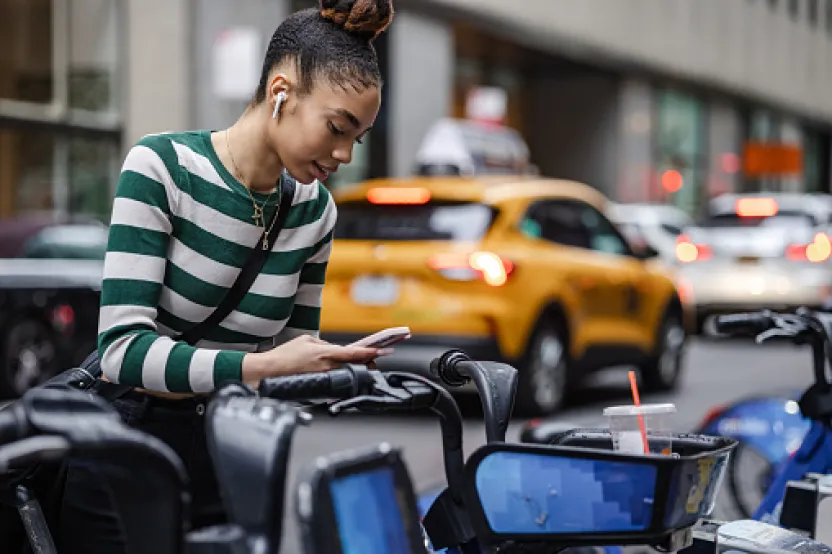
Deaths From NYC E-Bike Fires Fell to One in 2025 – Two Years After UL Standards Written Into Law
Quick action by lawmakers in New York City helped to lower the annual number of deaths from e-mobility fires drastically.…
-
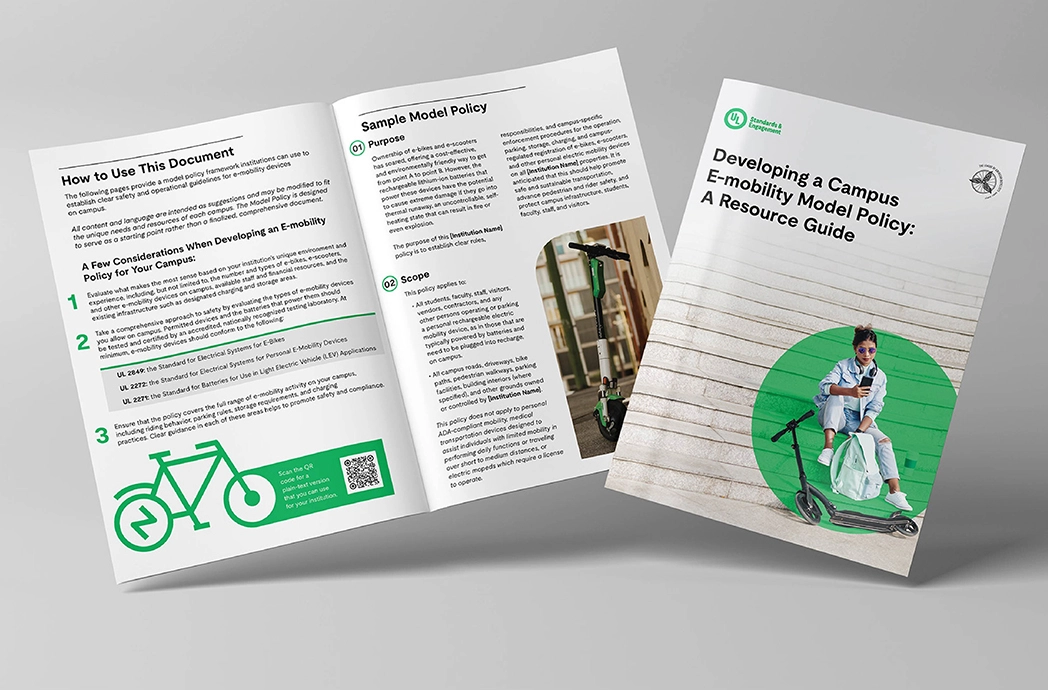
Ready-to-Use Campus E‑Mobility Policy Template and Guide
Learn how your college or university can support safe, consistent e-bike and e-scooter use while mitigating fire and electrical hazards.
Frequently Asked Questions
Education can help reduce e-mobility safety risks. Continue reading to find common questions about e-mobility safety and learn how to mitigate your risk.

most commonly asked
Why are battery fires in e-bikes and e-scooters a safety concern?
E-bikes, e-scooters, and hoverboards are commonly powered by rechargeable lithium-ion batteries, which present a risk of smoke, fire, toxic off-gassing, or explosion if damaged or malfunctioning.
Electric bikes, scooters, and hoverboards are exposed to demanding conditions such as vibration, water exposure, or mechanical shock from a bump, drop, or fall during use. This can increase the risk of damage to the lithium-ion batteries powering these devices.
Fires caused by lithium-ion batteries are faster and more aggressive than other fires.
Safer batteries are more expensive, and alternatives that are counterfeit or cut corners on safety are flooding the market.
There is a lack of awareness among consumers about just how dangerous their e-mobility devices can be, which leads to unsafe behavior.
How do I know if my e-bike or e-scooter battery is unsafe?
Watch for several warning signs of an unsafe battery. These include swelling or bulging of the battery, noticeable overheating during charging, damage from crashes or collisions, strange smells, and any signs of fire or smoke.
Electric bike, hoverboard, and scooter owners should always examine batteries for physical damage like punctures or dents, leaking, swelling, and other signs of thermal runaway, including an extremely hot-to-the-touch battery, unusual smells, smoking batteries, or hissing or popping sounds. If a device is parked outdoors and unattended, it may experience damage without the owner’s knowledge.
Where should I charge my e-bike or e-scooter?
You should not charge in locations that block fire exits, entryways, front doors, or hallways. According to research, 49% of riders charge at home block exit paths, which has been a contributing factor in several deaths. This is particularly dangerous because a battery fire can engulf a room in flames in less than 20 seconds.
E-bike or e-scooter batteries can catch fire even when they are not charging if they have sustained damage that would cause them to enter thermal runaway. A thermal runaway incident can take place hours or even days after an e-bike has sustained damage or been exposed to extreme hot or cold temperatures. If an e-bike has been in an accident or fall, owners should take extreme caution.
How long can I leave my device charging?
When charging your electric scooter, e-bike, or hoverboard device:
- Always follow manufacturer instructions when charging batteries
- Only use the charger supplied or recommended by the manufacturer — avoid counterfeit chargers
- Never charge your device near an exit, as it could block your escape in the event of a fire
- Do not overcharge batteries. In a recent survey by UL Standards & Engagement, more than half (55%) of e-bike owners admit to leaving devices plugged in after reaching full charge
- Never leave batteries unattended while charging or charge overnight while sleeping
- Do not charge batteries in extremely hot or cold temperatures
- Charge batteries before they completely lose power
- Never charge a device near heaters, direct sunlight, or other heat sources
How can I tell what e-bike or electric scooter battery I have?
Most batteries powering electric bikes, scooters, and hoverboards are lithium-ion batteries. You can often find the battery type listed on the battery case, in the instruction manual, or marked on your device by icons or symbols that note “Li-Ion” or “Li+.”
Only buy batteries and chargers that have been evaluated to safety standards, such as UL 2849, UL 2849 or UL 2272, and that have been approved for use with your device by the manufacturer. This means that the battery has been designed and constructed according to rigorous safety requirements. Counterfeit and unapproved replacement batteries do not offer the same protections as those that conform to safety standards and pose a higher risk of thermal runaway. Follow all instructions and markings provided by the manufacturer to reduce the risk of fire, electric shock, or injury.
When should I replace my e-bike or scooter battery?
There are several warning signs that indicate the need for battery replacement. These include swelling or bulging (which prompted 28% of replacements), overheating issues (24% of replacements), damage from crashes (16% of replacements), or any signs of fire (11% of replacements).
How can I know if an e-bike or electric scooter device is safe?
Look for devices that comply with safety standards, including UL 2849 for e-bikes, UL 2272 for personal e-mobility devices, and UL 2271 for batteries used in light electric vehicles. When an e-bike, e-scooter, or hoverboard is certified to a UL standard, the product’s batteries, chargers, electrical systems, and more, have been designed and tested to withstand conditions that the device may encounter during normal use including high temperatures, water exposure, and vibration. Certain tests even account for accidental drops, falls, or overcharging issues.
Spotlight
E-mobility Safety Standards
Safety standards have the power to save lives. Explore UL standards that improve detection and help prevent tragedies from e-mobility devices.
UL 2272: Electrical Systems for Personal E-Mobility Devices
UL 2272 evaluates whether a hazard is created when the user inadvertently drops a device during handling or lifting. During the test, the device is dropped three times from a height of approximately one meter to simulate how a user, such as a child, might handle the device. To comply with UL 2272, the tests must not result in explosion, fire, rupture of battery, electrolyte leakage, or electric shock hazard.
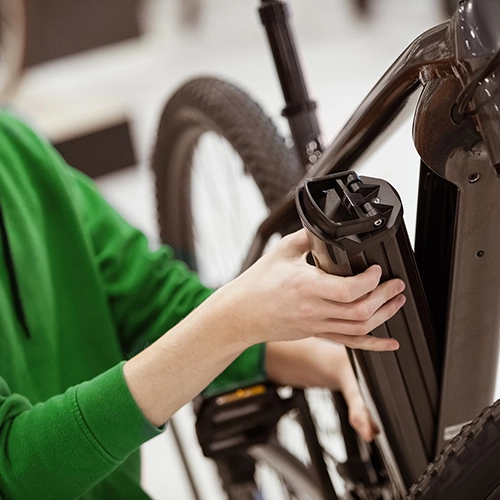
UL 2849: Electrical Systems for E-bikes
UL 2849 provides various construction, performance, marking, and instruction requirements. These requirements address the environmental, mechanical, and electrical hazards associated with e-bikes while also helping to inform users on proper care and maintenance practices.
UL 2271: Batteries for Use In Light Electric Vehicle (LEV) Applications
This standard covers the safety aspects of battery pack modules for LEVs. These include bicycles, hoverboards, golf carts, all-terrain vehicles, motorcycles, and many more. Most LEVs are not considered suitable for highway use.
Our catalog includes more than 1,700 safety standards and documents that are regularly updated and added to. Click below to keep exploring how our standards are making the world safer for you.
Take Action
Safety standards help make the world safer for people like you, and you can help. Take action now to support the adoption of e-mobility device safety standards.

Design policy proposals to help reduce fires caused by batteries in e-mobility devices.

Read our letter of support for the passage of S.389.

Download our toolkit to support safe, sustainable, e-mobility transportation.
Get Involved
The best standards are made possible by diverse voices and deep collaboration. Be part of the process by helping inform the next generation of standards.

Technical Committees
Each TC is a diverse group of experts representing a broad range of perspectives and interests, including consumers, manufacturers, regulators, supply chain professionals, and more.
As a TC member, you will review proposals for new or revised standards and work collaboratively to achieve consensus through balloting in our transparent process.

Stakeholders
Stakeholders can submit, review, and comment on proposals for new standards or revisions to existing standards. While these individuals cannot vote, the TC considers their input during the standards voting process. Since standards affect everyone, all are welcome to participate as stakeholders. Register online through our Collaborative Standards Development System, CSDS.