As International Women’s Day approaches, UL Standards & Engagement wants to recognize that progress in safety is propelled forward by the leadership, expertise, and persistence of women. Their role in shaping standards, informing policy, and protecting communities has led to a safer world for everyone.
In line with the 2026 theme, “Give to Gain,” we’re highlighting three women whose efforts span from fire safety to the danger of deadly carbon monoxide, to the role of gender in safety standards.
Designing Safety Standards that Reflect Real Human Differences
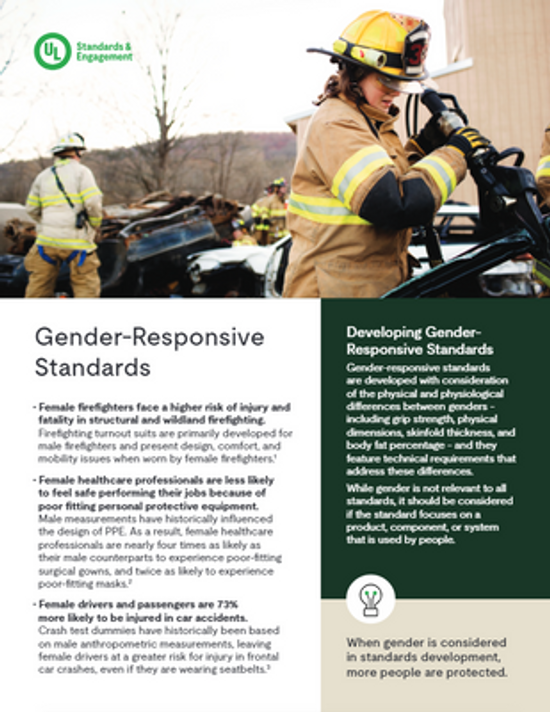
Designing safety standards that reflect real human differences — not outdated assumptions — is central to Michelle Parkouda’s work.
As manager of research at the Standards Council of Canada, she leads initiatives that measure and communicate the real-world value of safety standards that take gender into account. She authored the influential report, “When One Size Does Not Protect All: Understanding Why Gender Matters for Standardization.” In it, Parkouda highlights real-world consequences of exclusion in design — from medical face masks that don’t fit women and crash-test dummies that leave women at risk because both are based on male bodies, to disparities in medical research and heart attack treatment between women and men.
Parkouda’s work illuminates how gender-based assumptions can translate into serious safety gaps for women and that gender-responsive standards are not just equitable — they are essential to reducing risk. Parkouda has become a global advocate for gender-responsive standards: Through her leadership role with a United Nations initiative supported by ULSE, she is developing methodologies that hard-wire inclusion into standards development around the world.
Improving How Fire Risks are Identified
Improving how fire risks are identified — and prevented — has defined Genevieve Bures’ decades-long career. Bures got into fire and arson investigation while working as a chimney sweep. When she first started sharing her expertise at seminars, she faced skepticism, but her perseverance led to her emerging as a respected voice in fire safety and countless tragedies prevented. Bures was the first woman in the United States to become a certified fire investigator, and she has examined more than 4,000 cases nationwide since 1988.
In 2021, she notified ULSE that woodburning and other solid-fuel heaters were being improperly fitted into factory-built metal fireplaces. Her feedback led to additional warnings and instructions in UL 1482, the standard for solid-fuel room heaters, to help prevent fires from this kind of misuse. After flagging this concern, Bures joined a ULSE technical committee and played a pivotal role in the development of UL/ULC 1390, for fireplace inserts installed in masonry fireplaces. In 2025, ULSE honored Bures with a STAR Award for excellence in collaboration and her promise as a continuing contributor to ULSE standards.
Sounding the Alarm on the Dangers of Carbon Monoxide
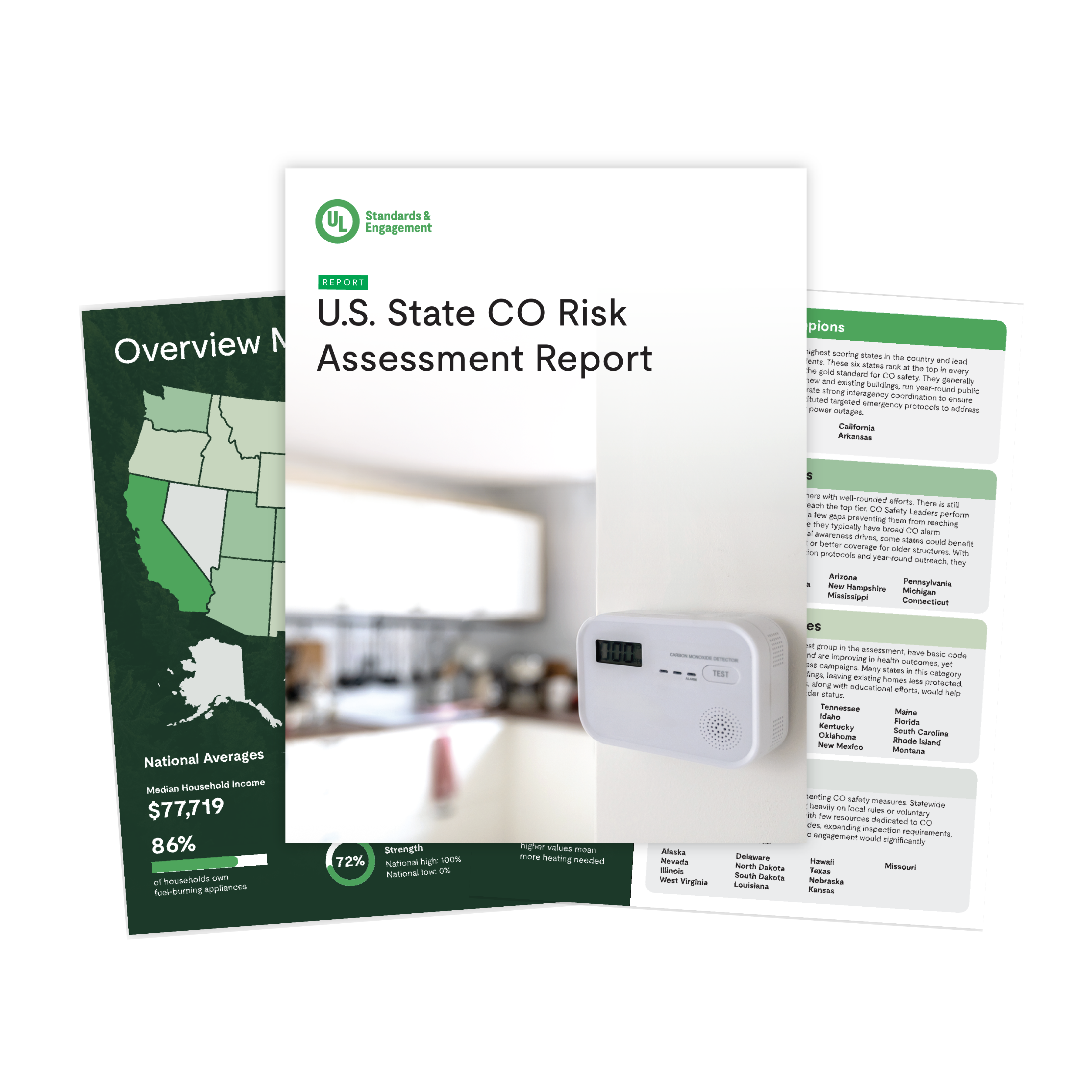
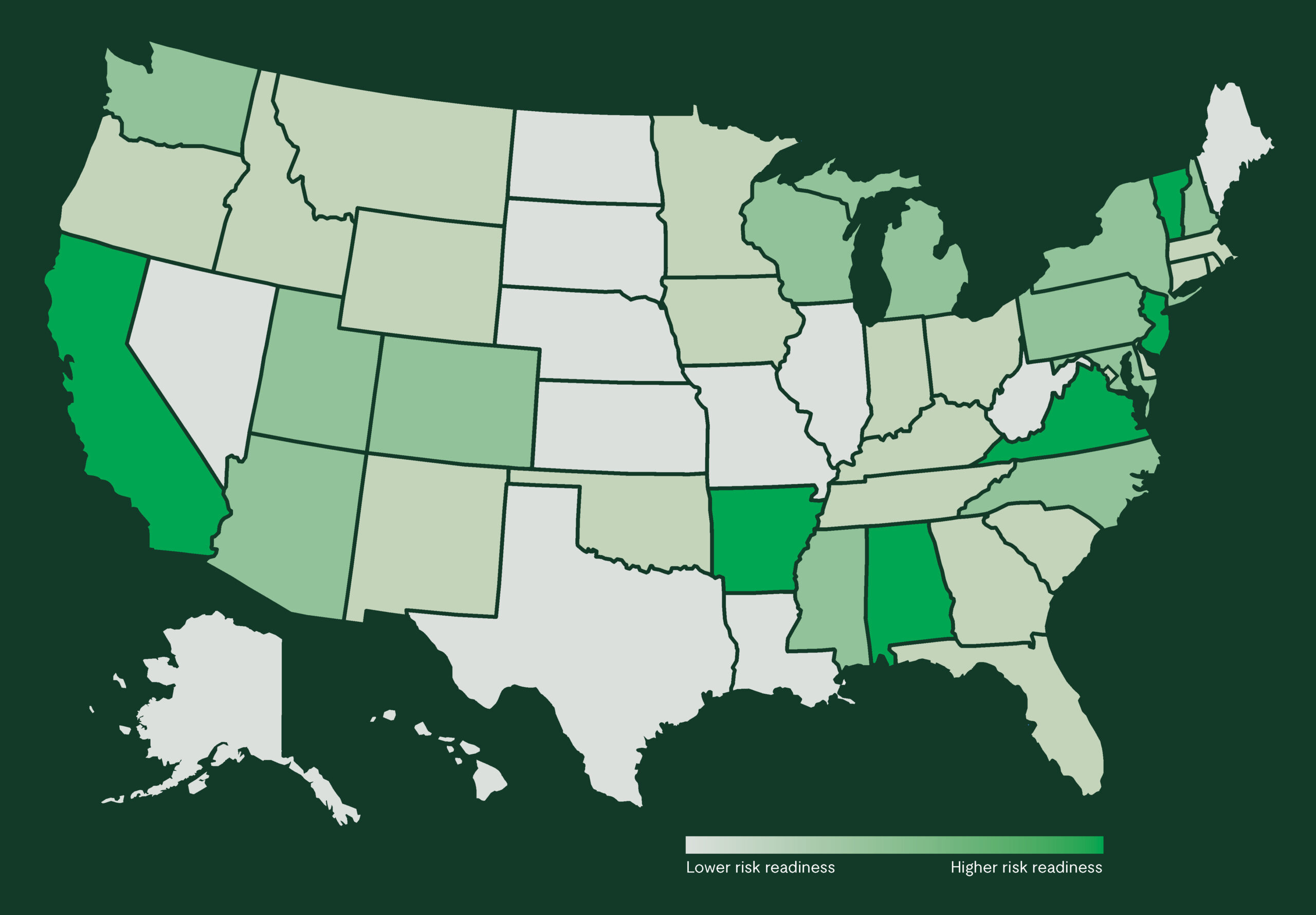
Read next: Carbon monoxide policies vary. See where your state stands.
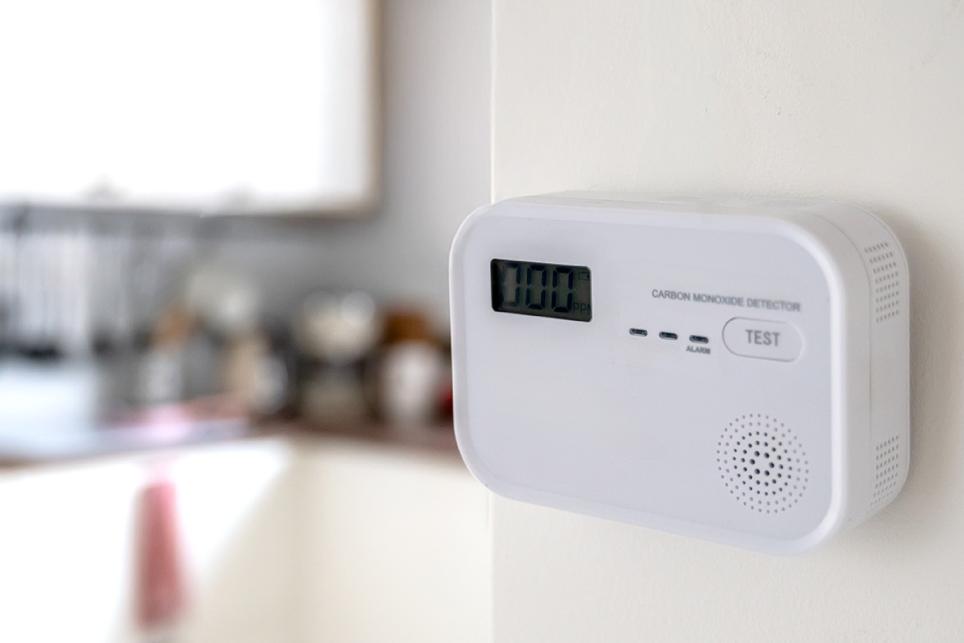
Kris Hauschildt turned a personal heartbreak into a crusade against a silent killer. In 2013, her parents, Daryl and Shirley Jenkins, perished from carbon monoxide poisoning at a hotel in Boone, N.C. Just seven weeks later, an 11-year-old boy lost his life in the same room, where investigators said the deadly gas had continued to seep out of a corroded pool heater exhaust system directly below. The hotel had no carbon monoxide detection system. Detection is often the only means of protection against carbon monoxide — a colorless, odorless gas that often offers no way of knowing mortal danger is present.
Hauschildt founded the Jenkins Foundation to sound the alarm on the dangers of carbon monoxide, and the need for alarm requirements that can save lives. She successfully proposed a change to UL 2034 that expanded carbon monoxide alarm coverage beyond homes to include places that may not have commercial detection systems like some hotels, motels, daycare centers, and restaurants. Today, her foundation website provides information on how to use alarms — both home units and travel versions — and help prevent a repeat of the tragedy she experienced.
The contributions of these impactful women remind us that safer outcomes do not happen by accident. They are built through evidence, advocacy, and resolve. On International Women’s Day — and every day — we appreciate the meaningful work of the many women who have been part of our mission of working for a world that is not just safer in principle, but safer for you.