Reported thermal runaway incidents in air cargo rose 40% between 2021 and 2025.
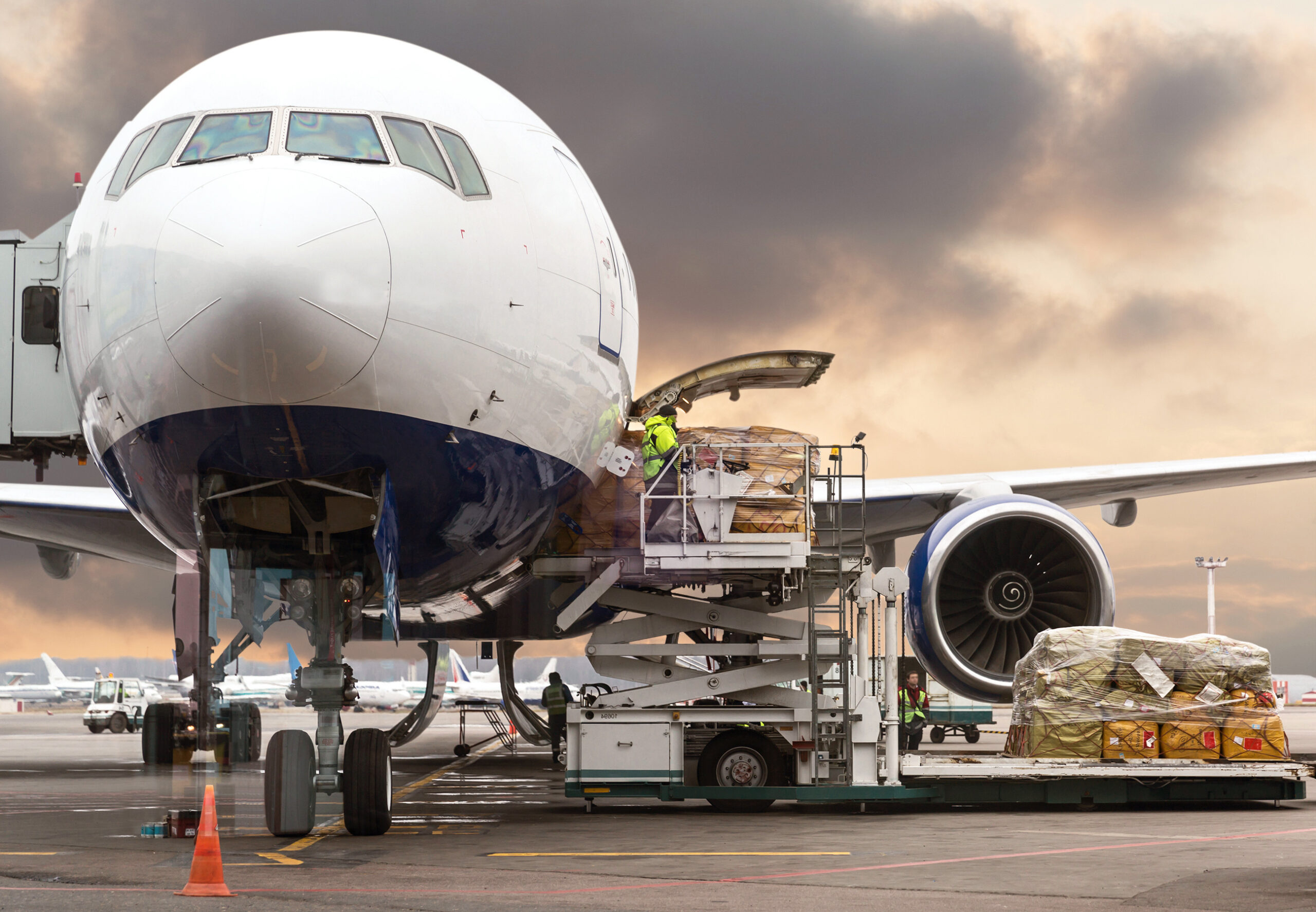
Lithium batteries, particularly lithium-ion batteries, are a routine part of global air cargo — and an increasingly urgent safety risk. Driven by consumer demand for low-cost, battery-powered products, reported thermal runaway incidents in air cargo rose 40% between 2021 and 2025, according to data from UL Standards & Engagement’s Thermal Runaway Incident Program (TRIP).
ULSE’s new report, Rising Incidents, Shifting Responsibility: Lithium Batteries in the Aviation Cargo Supply Chain, examines why these incidents continue to rise and where risk is entering the cargo supply chain through a mixed-methods study, combining quantitative incident analysis with qualitative insights from: cargo airlines, government bodies, freight forwarders, e-commerce stakeholders, and manufacturers and individual shippers.
Our research reveals a supply chain strained by fragmentation, uneven accountability, and commercial pressures that prioritize speed over safety. Understanding the core drivers of thermal runaway risk in air cargo, the conditions that allow that risk to persist, and the opportunities to strengthen accountability, coordination, and safety will lead to a stronger and more secure global supply chain.

Download the full report
Four Key Takeaways
- Thermal runaway incidents in cargo continue to rise alongside consumer demand for low-cost, battery-powered products. With greater consumer demand for products powered by lithium batteries, there are more batteries in cargo that could become a threat — exacerbated by persistent gaps in packaging, labeling, and chain-of-custody practices.
- Battery quality and shipper behavior are the core drivers of risk. Small and individual shippers (who may lack in-depth hazmat knowledge) commonly rely on carriers to catch errors, further reinforcing a pattern where responsibility shifts rather than settles. Uneven oversight and limited enforcement effectively push policing onto cargo airlines, leaving them responsible for mitigating risks they did not create and, in many cases, do not have the visibility to solve for.
- Geography is a predictor of cargo risk. With significant differences in manufacturing quality, regulatory oversight, and enforcement rigor across regions, a battery’s country of origin can be an indicator of a heightened threat. More than half of known-origin incidents begin in a handful of Asian airports — as do a significant number of battery shipments — contributing to industry perceptions that geographic disparities amplify other risks such as battery quality, shipper behavior, and third-party involvement.
- The system is built on trust — and just as equally on plausible deniability. A complex supply chain allows for diffusion of accountability. Batteries pass through many hands: manufacturers, wholesalers, freight forwarders, consolidators, postal networks, third-party logistics providers, and airlines. Each link depends heavily on the previous one to comply. This creates a system built on trust, but also one built on plausible deniability. When safety issues emerge, the fragmentation offers every stakeholder a scapegoat further upstream or downstream. The complexity of the battery supply chain makes it difficult to pinpoint problems, let alone arrive at solutions.
En chiffres
Thermal runaway incidents in cargo aviation have risen over the past five years, with 65 events reported in ULSE’s Thermal Runaway Incident Program between 2021 and 2025.
40%
increase in incidents from 2021 to 2025.
9%
average rate of increase in incidents per year.
42%
of incidents (where origin and destination airport data are provided) were of Asian origin.
25%
of air cargo in the U.S. is carried on commercial passenger flights.
Core Drivers of Thermal Runaway Risk in Cargo
Stakeholders identified several factors that allow thermal runaway risk to enter the supply chain in cargo aviation; two factors, however, were most common in their responses.

Battery Quality
Including the quality of the original and subsequent manufacturers, validity of battery testing processes, and battery lifecycle.

Shipper Behavior
Including regulatory compliance, labeling and declaration, packaging, and involvement of third parties.
Recommendations to Reduce Risk
- Establish clear, enforceable responsibility across the supply chain. All stakeholders must understand and uphold their specific role in compliance, safety, and documentation. In a system where accountability is easily shifted, defining responsibilities — and enforcing consequences — is essential to reducing risk and closing the gaps that allow for plausible deniability.
- Strengthen education and global industry coordination to reduce ambiguity and prevent errors. Shippers — especially small and individual ones — need more guidance than airlines realize, and do not appear to be effectively accessing the guidance currently provided by regulators, cargo carriers, or e-commerce platforms. Coordination, data-sharing, and education can reduce confusion, misdeclaration, and reliance on trust alone.
- Treat safety and cost as aligned — not competing — priorities, and drive solutions from the top down. Cutting corners on battery safety, packaging, or testing creates greater long-term financial, operational, and reputational risk. Regulators and global standards bodies must lead with uniform rules, training requirements, and enforcement structures that make safety the most economically rational choice. Shipping batteries that meet safety standards can reduce risk, as these batteries have proven to be safer and less prone to fire.
INTERVIEW INSIGHTS
“If you have poor quality, everything else down the road doesn’t matter because poor quality is always going to show its head.”
Battery Manufacturer

INTERVIEW INSIGHTS
“There should be something that I have to put on the outside of the box to let them know what’s inside, but that has never been shown or taught to me.”
Industry Shipper
INTERVIEW INSIGHTS
“…even if you’re properly trained, our regulations are really complicated. I think there’s deliberate noncompliance and innocent noncompliance.”
Industry Regulator
INTERVIEW INSIGHTS
“I think people… are not even aware that [batteries] can cause risks. There’s some people who know and do it anyway. Those are the really bad people…”
Industry Regulator
INTERVIEW INSIGHTS
“Regulatory authorities are really relying on carriers… to do a lot of their policing and enforcement and investigation to try and identify shippers, reject shipments, even to bar… or refuse business from certain shippers.”
Air Cargo Operator
Explore more insights in the full report.
Explore more insights in the full report.
En savoir plus sur la
Programme d'incidents de fugue thermique
Le service Normes et engagement d'UL dirige le Programme d'incidents de fugue thermique (TRIP), un système de notification volontaire conçu pour permettre à l'industrie aéronautique de mieux comprendre l'ampleur du problème et de se préparer à de futurs incidents - ou, idéalement, de les prévenir.
Les participants de 37 compagnies aériennes de transport de passagers et de fret fournissent des informations détaillées sur les incidents survenus dans le cadre de leurs activités. Les informations sont rendues anonymes et partagées avec l'industrie aéronautique et les organismes de sécurité, ce qui permet d'améliorer la sécurité du transport et de l'utilisation des produits alimentés par des batteries au lithium-ion. La base de données TRIP fonctionne comme un outil de surveillance, conçu pour recueillir des données sur la fréquence, les caractéristiques et les conséquences des incidents liés à l'emballement thermique des batteries au lithium-ion dans les opérations de transport de passagers et de fret.
L'administration fédérale de l'aviation recueille également des données sur les incidents liés à l'emballement thermique. Les données de la FAA proviennent des rapports fédéraux obligatoires, tandis que TRIP inclut des rapports supplémentaires à chaque étape du processus de voyage en tenant compte des incidents survenus dans le terminal, lors de l'enregistrement des bagages, aux points de contrôle de sécurité et à la sortie de la salle de réclamation des bagages.
-scaled.jpg)