Every week, passengers carry thousands of rechargeable devices through U.S. airspace without incident. But a small number of these devices enter a dangerous, uncontrollable overheating state known as thermal runaway. When an incident like this occurs, the lithium-ion batteries inside these devices can become very hot and swell to the point of smoking, sparking, and even catching fire or exploding.
On average, a lithium-ion battery enters thermal runaway more than twice per week on passenger planes in U.S. airspace. That’s about 123 thermal runaway incidents per year, with 1 in 8 resulting in significant passenger disruption: diverted landings, emergency evacuations, and unplanned returns to the gate.
In 2025, there was an additional increase of 15% in thermal runaway incidents on passenger planes
And unfortunately, these incidents have been consistently on the rise. In UL Standards & Engagement’s third annual Battery Safety in Aviation report, there was a 15% increase in thermal runaway incidents on passenger planes from 2024 to 2025. In response to the growing risk, airlines are tightening policies around rechargeable devices — including portable chargers, this year’s top culprit — to help reduce the risk of thermal runaway events in the cabin.
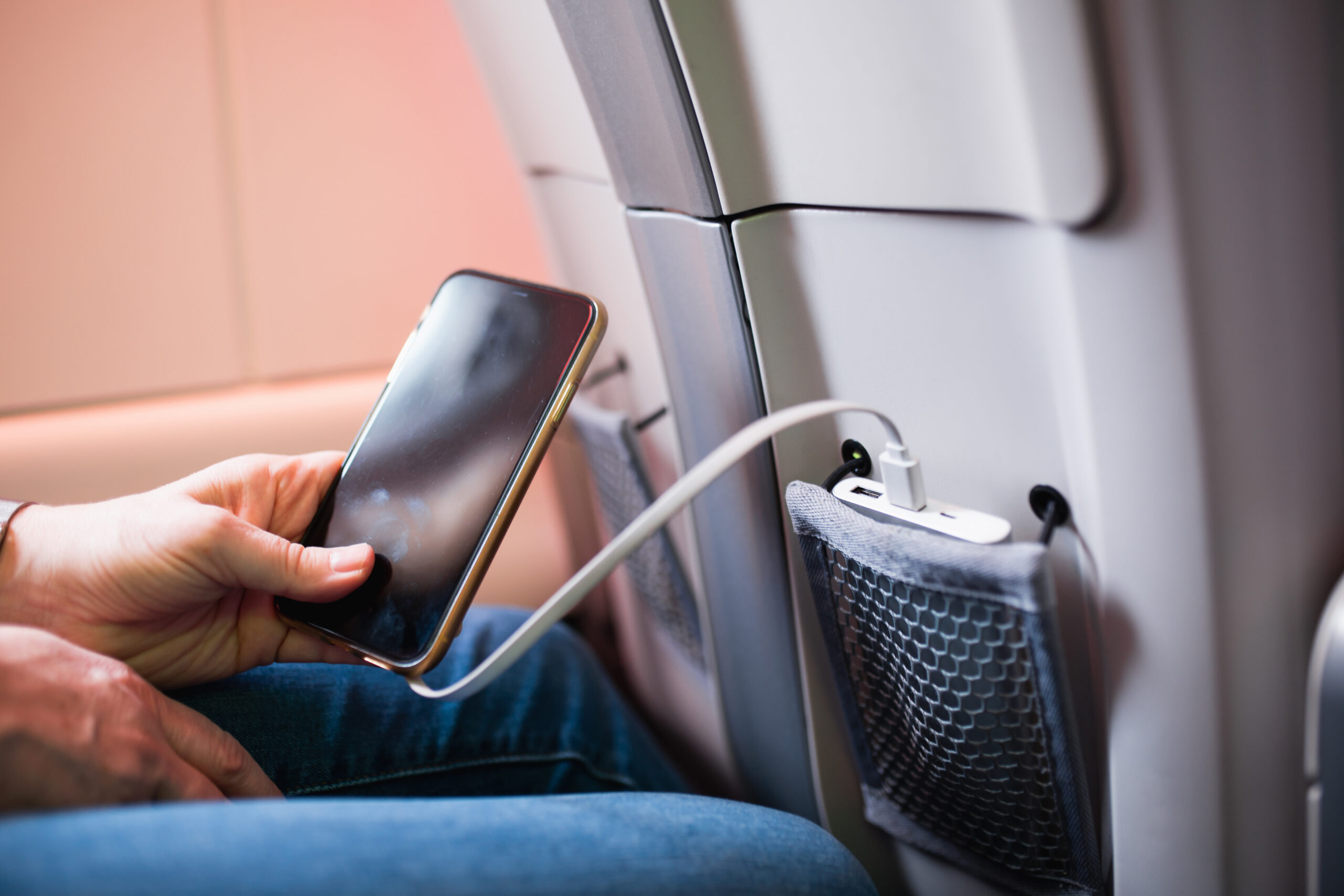
Portable charger incidents jumped 42% over the prior year, and that growing risk earned the attention of airlines. Recently, American Airlines announced updated restrictions on portable chargers, limiting passengers to carrying two power banks under 100-watt-hours each with no in-flight recharging, and they must remain visible. Similarly, Southwest now limits passengers to one portable charger per flight, prohibiting overhead-bin storage and in-flight recharging. Every major U.S. carrier and many international airlines have changed policies recently and it is important to check before flying. While these policy updates are important steps forward, the issue extends far beyond portable chargers.
Beyond Power Banks: The Wider Risk
While these policy updates are important steps forward, the issue extends far beyond portable chargers. Anything with a lithium-ion battery — about everything rechargeable — carries a thermal runaway risk. Every year, we see a wider variety of product types involved in incidents. And while portable chargers and e-cigarettes top the list, everything from baby monitors to personal fans have been reported.
As society becomes increasingly dependent on rechargeable technology, passengers are traveling with more battery-powered devices than ever before. The types of devices entering the aviation system continue to evolve, creating new operational and safety challenges for airlines and airport personnel alike.
Considerations for All Airlines
With so many devices essential to the travel experience, safer skies will be about managing the lithium-ion battery-powered products on board, not keeping them out. There is no silver bullet solution, but there are options to reduce the risk.
- Educate passengers on where to pack rechargeable devices. ULSE surveys show 58% of travelers are unaware that lithium-ion batteries power many products they routinely use, leading to unsafe practices such as packing or storing devices improperly. Approximately 39% of passengers admit to putting lithium-ion powered products out of reach in their checked luggage. A device that’s within reach is a device that can be more quickly and effectively managed in the event of thermal runaway.
- Strengthen cabin crew training. While most crews already receive thermal runaway response training, scenario-based instruction tied directly to available onboard equipment and real-world incident response is imperative.
- Look for certified mitigation equipment. In the event of thermal runaway, a device can be placed into a containment product, which will help to contain any visible smoke, shrapnel, sparks, or flames emitting from the device. Containment products certified to UL 5800 have been proven the most effective for managing thermal runaway incidents in FAA blind testing.
Airlines are making meaningful progress, but policy changes alone will not solve the growing challenge of lithium-ion battery incidents in aviation. Industry-wide collaboration among airlines, manufacturers, regulators, airports, and passengers will be essential to improving safety as rechargeable technologies continue to expand and evolve.
To learn more about battery safety in the sky, check out our aviation safety information on ulse.org. To get involved with ULSE’s Thermal Runaway Incident Program, visit MyTRIPportal.org.