A PRIMERA VISTA
- Rechargeable technology has become foundational to modern life, but significant knowledge gaps about lithium-ion battery safety can contribute to risky behaviors.
- Learn how to safely use, charge, store, and manage rechargeable products, from choosing compatible chargers, to recognizing the warning signs of a failing battery.
Not too long ago, if one of your electronics ran out of power, rather than running around the house looking for a charger, you’d be searching through drawers looking for actual batteries.
Somewhere between then and now, a dramatic shift happened, and society transitioned heavily toward rechargeable, lithium-ion battery-powered devices. According to UL Standards & Engagement’s latest report, La sociedad recargable: Construyendo confianza en un mundo alimentado por baterías, 98% of U.S. consumers own at least one rechargeable device in 2026, with the average individual owning nine. These range from smartphones and tablets, to doorbells, wireless security cameras, kitchen appliances, and e-bikes.
Rechargeable technology has brought significant convenience and affordability, making it foundational to modern life. However, widespread adoption has not translated to widespread understanding as there are critical knowledge gaps that can contribute to risky behaviors. Many don’t understand the fire risks that lithium-ion batteries carry if they are damaged or malfunctioning. More than half (58%) are unaware that their rechargeables are even powered by lithium-ion batteries. And not understanding the power source directly contributes to not understanding the risk, leaving consumers less equipped to make informed choices about everyday use.
de los consumidores no saben que las baterías de iones de litio alimentan muchos de los productos que utilizan habitualmente.
The Danger of Not Knowing
Thermal runaway is an uncontrollable, self-heating event in a lithium-ion battery that can result in smoke, fire, and explosion. It can be triggered by damage such as impact or water ingress, but it can also occur as a result of improper charging. The charging lesson is compatibility, which does not always translate to price or the biggest wattage number on the label. For example, a compatible laptop power adapter is not automatically unsafe for a smaller device, but it is still important for consumers to use charging equipment recommended by the device manufacturer.
While rechargeable products are widespread, only 43% of consumers recognize the phrase “lithium-ion battery,” and 59% of consumers are unfamiliar with ways to reduce thermal runaway risk. Knowledge gaps like this can affect everyday decisions, including which products consumers purchase, which chargers they use, and where they charge their devices. Here’s one practice place to start: rechargeable products should be charged with compatible, manufacturer-recommended chargers in open, visible areas and on hard surfaces. If your laptop is charging on a bed or sofa as you read this, this message is for you. While your bed may double as a workspace, this practice is definitely unsafe — as cushions and bedding can trap heat and increase the risk of overheating and fire.
Where You’ll Find Lithium-Ion Batteries
Lithium-ion battery technology isn’t limited to small electronics. Increasingly, homeowners are having battery energy storage systems installed in their homes, which use lithium-ion batteries to store energy and can provide backup power for use during outages, or supplemental power by collecting energy from home solar power installations. According to the ULSE report, nearly 1 in 10 homeowners report having a BESS installed in their homes. Among those homeowners, half report installing a smoke detector near the system, or have educated themselves about what to do in the event of a lithium-ion battery fire. These findings indicate that while many consumers are taking precautions, significant gaps remain.
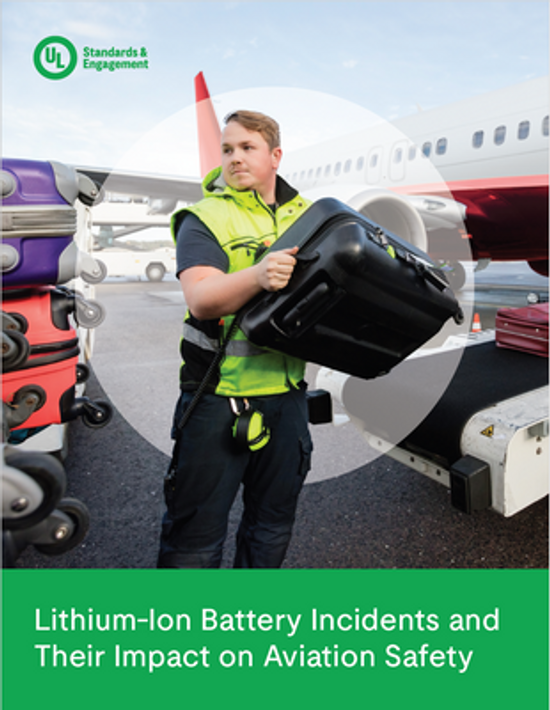
Air travel offers another important example. Thermal runaway incidents on passenger aircraft increased 15% in 2025, rising to 123 incidents, from 107 incidents in 2024, according to ULSE research. In cargo operations, incidents increased about 40% between 2021 and 2025. These findings reinforce the importance of battery safety across both passenger travel and the cargo supply chain.
How We Can Move Forward in a Battery-Powered World
Living in this new Rechargeable Society requires awareness, informed decision-making, rigorous safety standards, and a shared understanding of how to safely use, charge, store, and manage the products that power modern life.
Battery safety begins with a safer market and collective accountability — from manufacturers, to regulators, to consumers. Products certified to applicable safety standards help provide assurance that design, performance, and safety requirements have been independently assessed. For manufacturers, that means integrating safety throughout product development and identifying compatible batteries and charging equipment clearly. For standards development organizations and policymakers, it means keeping safety requirements responsive to emerging technologies. For consumers, it means looking for products certified to applicable safety standards and following the manufacturer’s instructions.
“Battery safety begins with a safer market and collective accountability — from manufacturers, to regulators, to consumers.”
Consumers can also help reduce risk by seeking credible safety information, following manufacturer instructions, using compatible charging equipment, and recognizing warning signs. It’s important for consumers to know what counts as a warning sign. Unusual heat, swelling, or an unfamiliar odor are reasons to stop using the device and to move it outdoors away from anything flammable if it is safe to do so. If a device is smoking, popping, hissing, sparking, or emitting flames, get to a safe place and dial 911.
We can benefit from the convenience, resilience, and sustainability of the Rechargeable Society, but we need to be aware of the risks in order to help minimize harm to people, property and the environment.
Preguntas frecuentes

preguntas más frecuentes
What is a BESS?
A Battery Energy Storage System (BESS) utilizes multiple batteries to store and distribute electrical energy. These systems support electrical grids, residential solar installations, and backup power applications.
¿Qué es el escape térmico?
Thermal runaway is an uncontrollable, self-heating chemical reaction inside a lithium battery that can cause extreme heat, smoke, fire, or explosion.
¿Qué debería buscar al comprar un producto recargable?
Consumers should not assume that a product is safe simply because it is available for purchase. Before buying, check the product packaging, label, or online specifications for evidence that it has been certified to applicable safety standards by a recognized independent organization. Consumers should also review the manufacturer’s instructions, confirm that compatible charging equipment is included or clearly identified, and be cautious when safety or certification information is missing or difficult to verify. Price and convenience matter, but they should not outweigh evidence that a rechargeable product has been evaluated for safety.
Where and how should rechargeable products be charged?
Rechargeable products should be charged with compatible, manufacturer-recommended equipment in an open, visible area and on a hard surface. Avoid charging devices on beds, sofas, under rugs, inside closets, or in other places where heat can build up or warning signs may go unnoticed.
How should old or damaged rechargeable batteries be disposed of?
Rechargeable batteries should never be placed in standard household trash or municipal recycling bins. Instead, they must be taken to dedicated electronic waste recycling facilities or specialized drop-off locations. For a damaged, swollen, or recalled battery, contact the battery or device manufacturer for specific handling and disposal instructions before taking it anywhere; do not assume a routine battery drop-off box can accept it.
¿Dónde puedo obtener más información sobre los resultados completos?
Descarga el informe completo, La sociedad recargable: Construyendo confianza en un mundo alimentado por baterías.