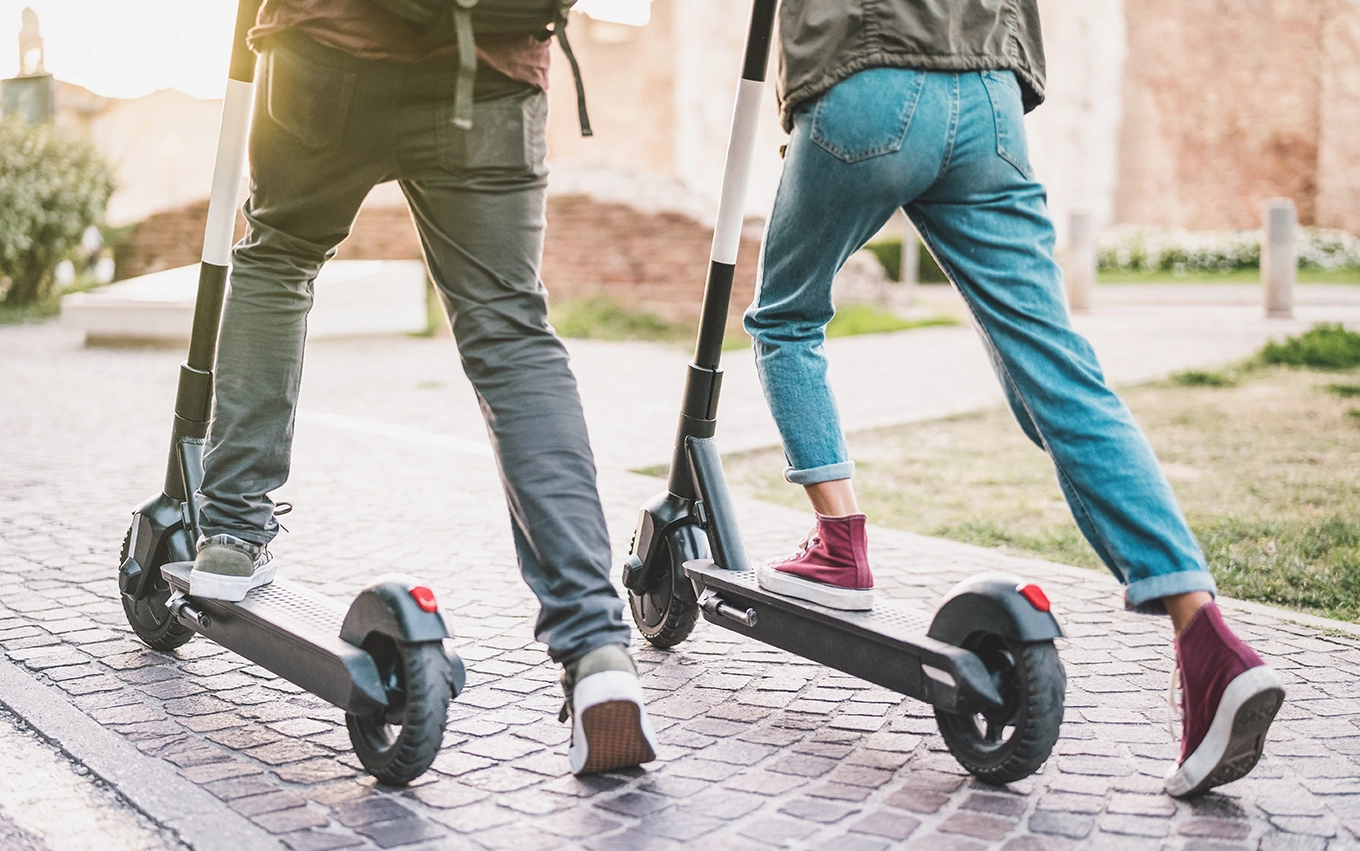
As e-bikes, e-scooters, and other micromobility devices become campus staples, balancing the convenience of these devices with safety is more critical than ever.
To support college and university leaders in developing policies to help reduce lithium-ion battery risks while preserving student access to e-mobility devices, UL Standards & Engagement and the League of American Bicyclists convened a cohort of six campus safety, facilities, and transportation leaders over the course of six months. The resulting Campus E-mobility Model Policy and Guide helps institutions move beyond bans toward clear, adaptable standards for charging, storage, and usage.
What’s Inside
- Ready‑to‑adapt policy language
- Practical safety checklists for riding, storage, and charging
- Research highlights for communicating with decision‑makers
- Enforcement and penalty recommendations
- Guidance on lithium‑ion battery risk factors and the standards that support safer e‑mobility devices
3 Best Practices for Campus Micromobility Policies
- Evaluate your unique environment: Determine what makes the most sense based on your institution’s unique environment and experience, including but not limited to, the number and types of e-bikes, e-scooters, and other e-mobility devices on campus, available staff and financial resources, and the existing infrastructure such as designated charging and storage areas.
- Take a comprehensive approach to safety: Evaluate the types of e-mobility devices you allow on campus. Permitted devices and the batteries that power them should be tested and certified by an accredited, nationally recognized testing laboratory. At minimum, e-mobility devices should conform to the following:
- UL 2849: the Standard for Electrical Systems for E-Bikes
- UL 2272: the Standard for Electrical Systems for E-Mobility Devices
- UL 2271: the Standard for Batteries for Use in Light Electric Vehicle Application
- Cover the full range of activity: Ensure that the policy covers riding behavior, parking rules, storage requirements, and charging practices. Clear guidance in each of these areas helps to promote safety and compliance.
Access the complimentary resource that works best for you
Full Guide
Explore the full model policy and guide, featuring survey insights, recommendations, additional resources, and more.
Plain Text
Access a ready-to-customize version of the model policy text.