一览
- E‑mobility use is widespread on campuses, but only a small share have comprehensive policies in place, leaving safety gaps.
- Incidents and fire risks are pushing some schools toward bans, but standards-based policies offer a safer, more practical path.
- ULSE’s model campus policy gives universities ready-to-use guidance to require certified devices, improve charging safety, and help reduce risk.
Earlier this year, we shared research with a clear message: while e-mobility devices, like e-bikes and e-scooters, have become a campus staple, the policies and infrastructure needed to support their safe use are not yet in place. Only 9% of the Bicycle Friendly University campuses we surveyed had a comprehensive e-bike policy.
of Bicycle Friendly Universities surveyed in 2024 had a comprehensive e-bike policy in place.
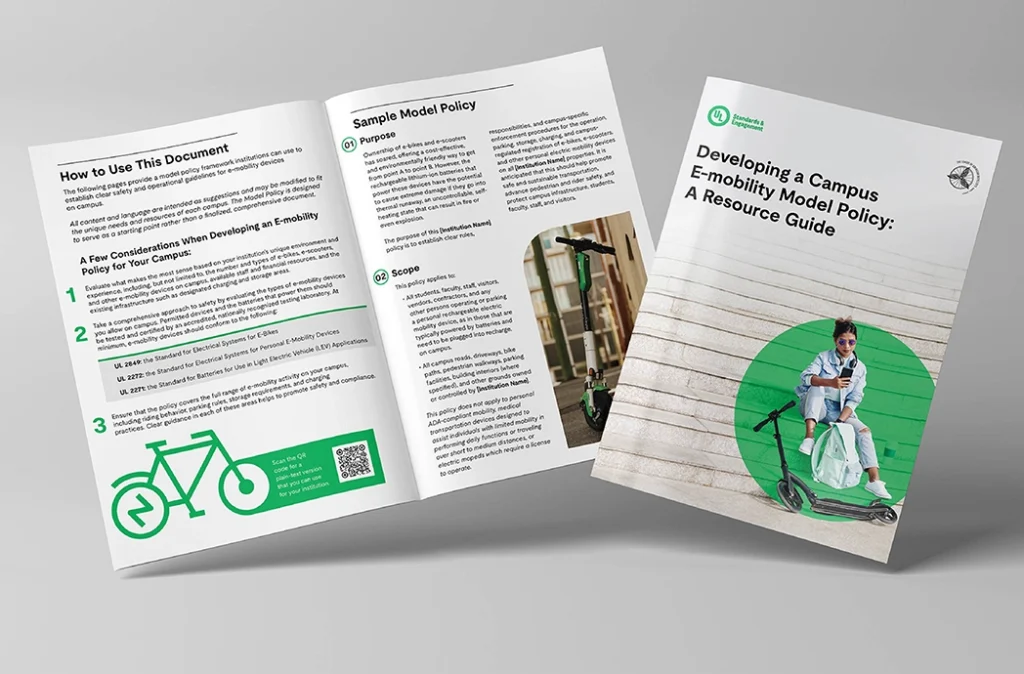
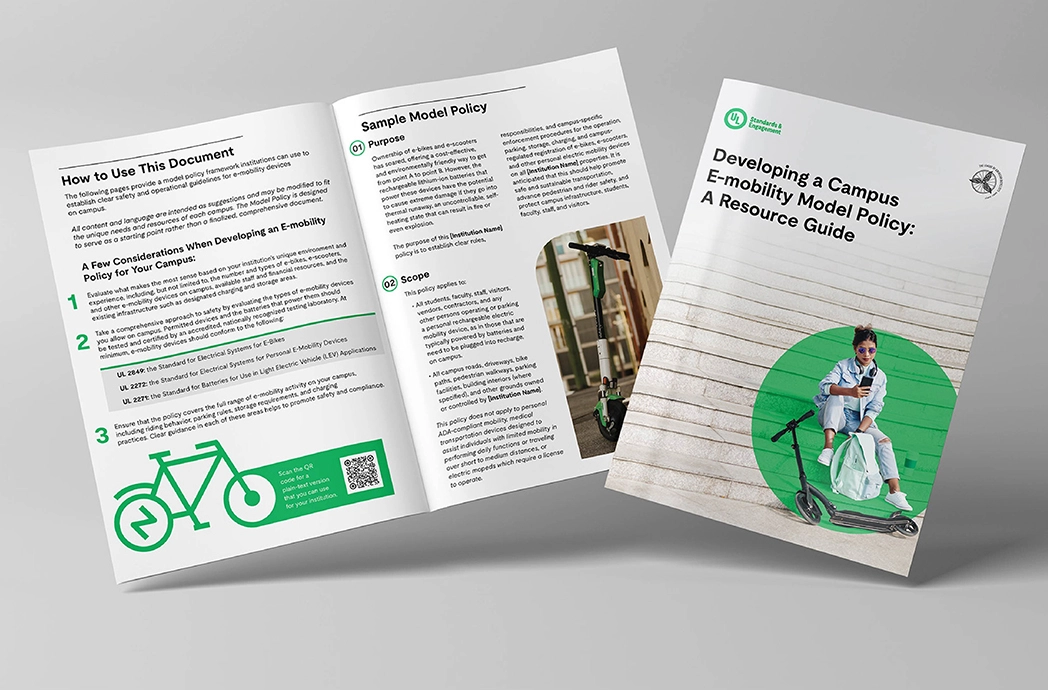
Recent incidents like the fire linked to an e-mobility device at a Yale robotics lab in March are leading some campuses to consider full bans of e-mobility devices on campus, rather than strategic policy implementation. Although bans eliminate risk, they also eliminate an affordable and effective method of transportation for students. In response to this growing problem, ULSE and the League of American Bicyclists spent six months convening campus safety, facilities, and transportation leaders to develop a practical, free resource: the Campus E-Mobility Model Policy and Guide.
Rather than leaving administrators to start from scratch, the Campus E-Mobility Model Policy and Guide provides ready-to-adapt policy language, safety checklists, and clear guidance on lithium-ion battery risk. Administrators can customize these materials to fit their institution and put a functional policy in place virtually overnight.
What Universities Can Do
With these materials, colleges can act now to reduce risks. The guide lays out several clear steps for universities to improve campus e-mobility safety:
- Implement clear, enforceable e-bike policies that cover where devices may be ridden, stored, and charged. Campuses should require certified devices, batteries, and chargers, since uncertified products are tied to a disproportionate share of fires.
- Create safety training programs so students understand how to ride and charge responsibly. In addition to promoting helmets, reflective gear, and traffic awareness, training should educate students on safe charging and storage practices, including keeping devices away from exits and avoiding overnight charging.
- Regularly review and update policies as technology evolves. New devices, battery systems, and charging methods are emerging quickly, and campuses need rules that keep pace with changing risks and transportation needs.
- Expand safe, convenient charging infrastructure. Designated charging hubs and parking areas reduce reliance on dorm outlets and improvised setups, when batteries are most vulnerable, while making compliance easier for students.
Action in Practice
As the data from our study made clear, the challenge isn’t awareness, most campus administrators know e-mobility safety is an issue. The problem is moving from recognition to policy. With summer approaching and a new academic year on the horizon, now is the right time to close that gap. E-mobility devices aren’t going away, and neither is the risk of inaction.
Many institutions, including The Massachusetts Institute of Technology, University of California, Los Angeles, Texas A&M University和 Arizona State University, have already shown that standards-based policy is workable and enforceable.
For campuses that have yet to act, our recommendation is to avoid blanket bans, invest in charging infrastructure, and educate the community. Most importantly, campuses should implement a clear, comprehensive policy that addresses riding, storage, charging, and device certification together.
For more information, check out our Ready-to-Use Model Policy here: Ready-to-Use Campus E‑Mobility Policy Template and Guide – UL Standards & Engagement