Southeast Asian nations are rapidly adopting battery technologies to power their rechargeable societies, making strong safety standards essential to protect people, property, and community. As lithium-ion batteries now power everything from personal devices to critical infrastructure, delivering enormous benefits, safety must evolve with it.
To support this, UL Standards & Engagement recently convened and supported a series of engagements in Singapore focused on battery safety science, fire safety, emergency response and standards development. These included the Association of Southeast Asian Nations (ASEAN) Battery Safety Science & Innovation Conference 2026, the Regional Fire Departments’ Meeting, a Progress Meeting of the ASEAN Battery Safety Network, and technical roundtables with Singapore MOU Partners Enterprise Singapore and the Institution of Fire Engineers Singapore.
ASEAN Battery Safety Science & Innovation Conference 2026
On 30 April, ULSE joined partners and stakeholders at the ASEAN Battery Safety Science & Innovation Conference as part of the Milipol TechX Summit (MTX) 2026, to engage in the latest developments in battery safety and energy storage. The conference built on the momentum of the 2024 and 2025 editions of the ASEAN Battery Safety & Innovation Conference, bringing together stakeholders, researchers, and regulators from across Southeast Asia to discuss battery safety and energy storage issues.
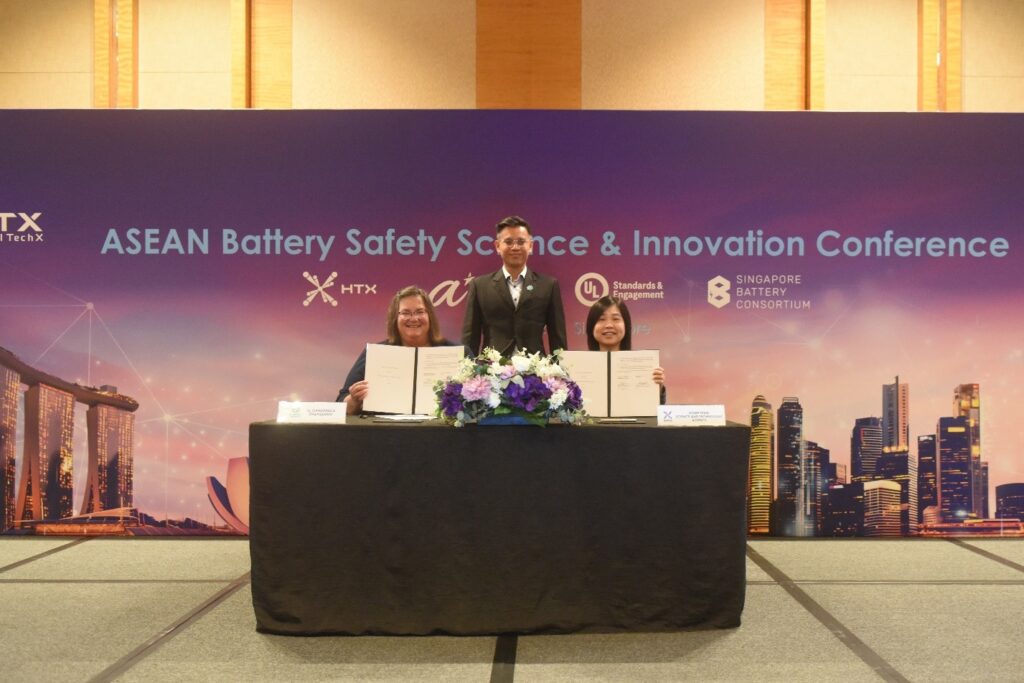
A major milestone of the conference was the signing of an MOU between ULSE and Singapore’s Home Team Science and Technology Agency (HTX), signed by Ms. Sonya Bird, ULSE’s Vice President of International and Ms. Chin Chin Lim, Assistant Chief Executive (Science) of HTX, under the witness of Mr. Shi Xuan Ng, Member of Parliament of Singapore.
This MOU is an important milestone for ULSE in Asia, deepening ULSE’s collaboration with the Singapore Government to advance battery safety research & development, shape emergency response preparedness, and accelerate standards and public policy development through a safety science-based approach. This MOU builds on ULSE’s ongoing partnerships with Enterprise Singapore, Singapore Battery Consortium and the Institution of Fire Engineers Singapore on standards development, battery safety knowledge exchange and fire safety.
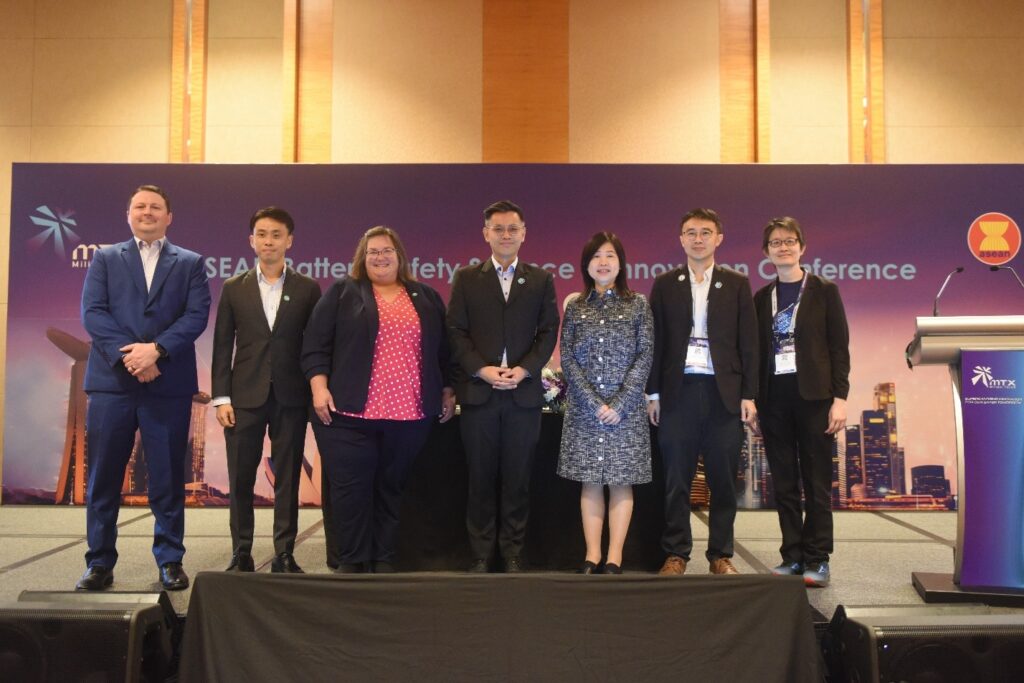
The ASEAN Battery Safety Science & Innovation Conference attracted over 200 participants featuring expert-led lectures addressing critical challenges in battery fire safety. Speakers include Mr. Adam Barowy, Principal Research Engineers, UL Fire Safety Research Institute; Dr. Chiam Sing Yang, Technical Director of Singapore Battery Consortium, Senior Assistant Commissioner Alan Chow, Senior Director, Operations Department at the Singapore Civil Defence Force.
Regional Fire Departments’ Meeting and ASEAN Battery Safety Network Meeting
Alongside the conference, ULSE hosted the latest Regional Fire Departments’ Meeting bringing together Fire Departments and Emergency Response Agencies across Singapore, Malaysia, Philippines, Indonesia and Vietnam., The conversation focused on science-based recommended practices for responding to incidents involving electric vehicles and the use of standards within codes that specifically safeguard energy storage systems. These are critical as fires involving lithium-ion batteries can present unique hazards for responders, and calls upon public safety responders to delve into tactical considerations when fighting lithium-ion battery-based fires.
On a parallel track, ULSE joined the ASEAN Battery Safety Network (ABSN), a regional platform under the ASEAN Committee on Science, Technology and Innovation (COSTI) that brings together battery safety experts, regulatory agencies and fire and emergency services personnel to address safety challenges arising from rapid adoption of batteries in energy storage systems and electric vehicles. ULSE was recognized as an official partner of the Network in mid-2025, reflecting ULSE’s role in contributing technical expertise, standards knowledge, and access to a broader network of safety science experts. The meeting allowed members to assess capability gaps across ASEAN and identify priority areas where additional technical support can accelerate regional readiness.
Technical Exchanges with Singapore-based Partners
Within the same week, ULSE co-hosted a series of technical exchanges in Singapore with Enterprise Singapore – Singapore’s National Standards Body – and the Institution of Fire Engineers Singapore, a key global professional body supporting fire safety knowledge and practice.
At these exchanges, Adam Barowy, Principal Research Engineer at the UL Fire Safety Research Institute, shared FSRI’s research on hazards associated within EV fires and lithium-ion batteries, their burning behaviors, as well as potential control, suppression and mitigation strategies to address this type of fires. The depth of discussions underscored how UL Enterprise’s technical expertise can bring value to Singapore stakeholders across science-driven communities.
Safety Science as a Foundation for Safer Innovation
The engagements during the week underscored the importance of sustained collaborations among governments, standards bodies, researchers, safety practitioners and industry, especially in advancing battery innovation without compromising on safety.
Ain the rechargeable society, batteries become more integral to everyday life and safety is no longer just a technical issue; it is a community issue, central to public safety, emergency responder readiness, and sustained public confidence. As Southeast Asia continues to advance electrification, clean energy and resilient infrastructure agendas, ULSE continues to strive forward to work with our partners across the region to support the safe and sustainable deployment of battery technologies.