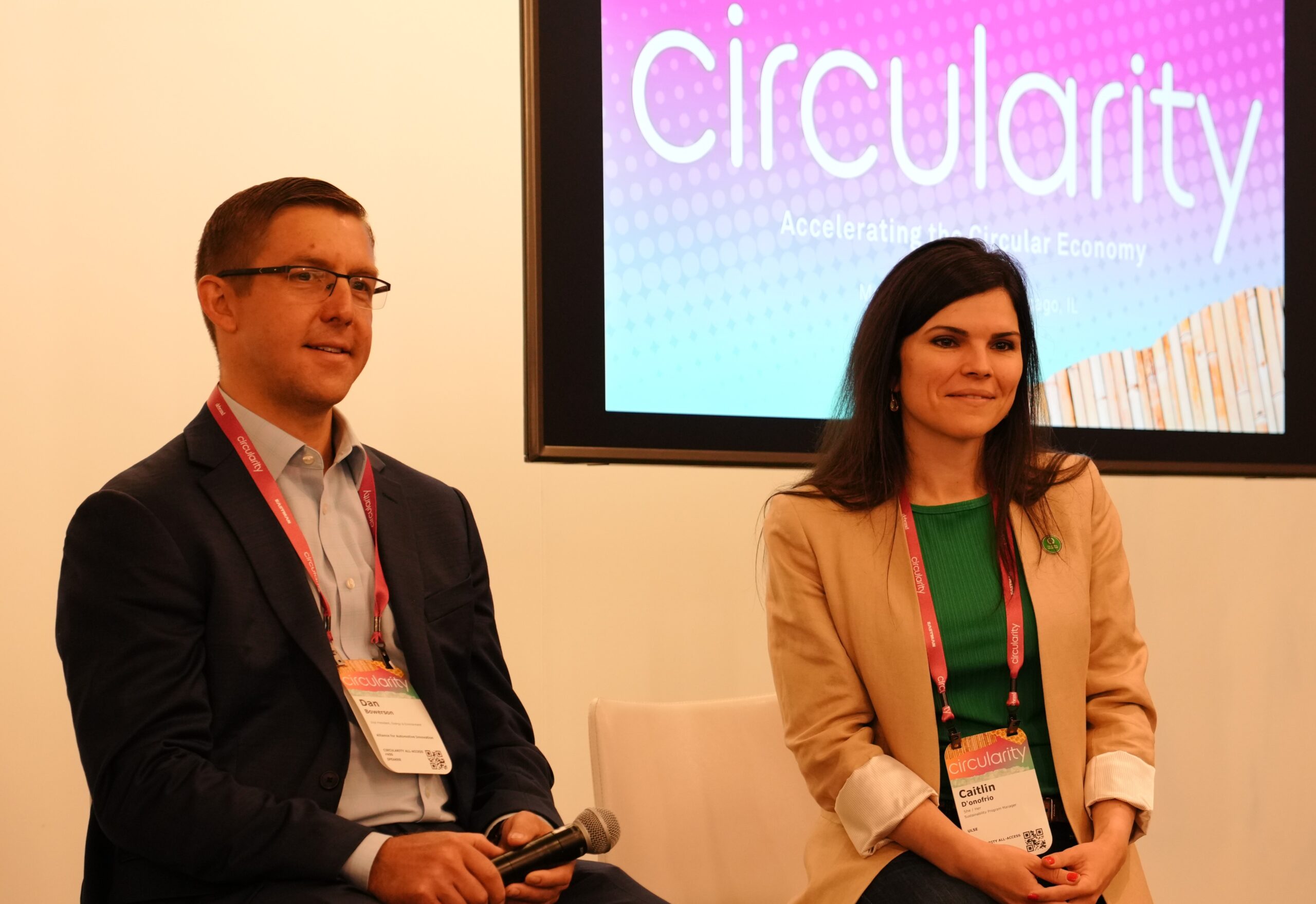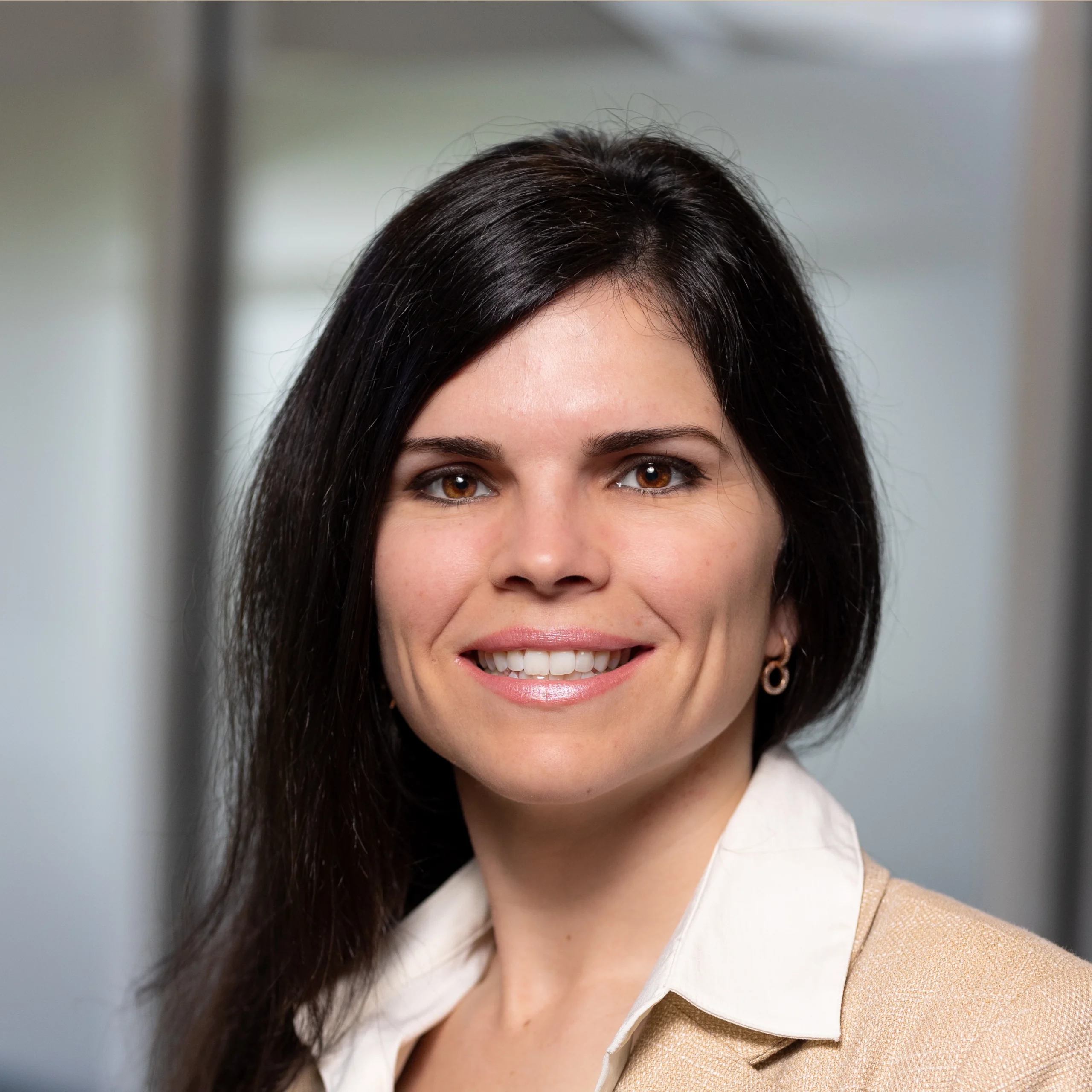
凯特琳-达诺弗里奥
Senior Program Manager
Caitlin D’Onofrio is senior manager of the Standards Sustainability program at UL Standards & Engagement, where she leads strategic initiatives to advance sustainability standards that address critical issues impacting people and the planet, including battery repurposing, climate resilience, indoor air quality, and electronics sustainability.
We had the chance to sit down to get to know Caitlin better. Learn more about her experience and how it’s defining her approach to working for a safer, more sustainable world:
Q: Caitlin, tell us a little about yourself and your role at UL Standards & Engagement. What does your work focus on day-to-day?
A: Four years ago, ULSE wanted to focus on sustainability standards, and I was brought on as the inaugural program leader for the Standards Sustainability program. We began with UL 3600, our circular economy standard, which gave us the foundation to build a sustainability program from the ground up.
Today, I lead a dedicated team focused on advancing safety and sustainability standards while also helping scale new technologies that require sustainability considerations. We’re particularly focused on circular economy principles and increasingly exploring climate resilience. Day to day, I collaborate with industry partners, policymakers, and other stakeholders to help advance and develop standards that are both adoptable and scalable.
I also focus on bridging the gap between theory and implementation. Standards outline the “what,” but people often struggle with the “how.” My goal is to make sure standards provide clear, actionable guidance, and ensure that sustainability isn’t an afterthought.
Q: Why is sustainability such a key factor in the clean energy space?
“Sustainability at the forefront means finding lasting solutions that address root issues, not just applying a ‘green’ label to business as usual.”
A: Sustainability is crucial in clean energy, and it often comes down to ensuring that these solutions are socially equitable and environmentally responsible over the long term. The issue many people don’t consider is that “clean” technology isn’t always produced cleanly. The extraction of raw materials, the manufacturing processes, and the supply chain can all be just as harmful to the environment as non-clean alternatives if not done thoughtfully.
Take lithium-ion batteries, for example. The global supply chain faces a critical challenge: we’re running out of rare materials needed to manufacture these batteries. Rather than simply extracting more, we need to rethink how we design batteries with reuse and repurposing in mind from day one.
Sustainability at the forefront means finding lasting solutions that address root issues, not just applying a “green” label to business as usual.
Q: What role do standards play in helping policy make sustainable technologies safer at scale?
A: Standards provide a consistent technical foundation that can be used as a starting point for policies that support scale. They can help set clear benchmarks and create the framework needed to scale technology safely through harmonization.
The challenge is timing. Policymakers often look to standards for guidance, but standards development is a deliberate and intentional process that requires input from multiple stakeholders before documents are finalized. We need to be future-thinking and collaborative so that when policymakers are ready, the standards infrastructure is already there to support it.
Q: What is battery circularity and how does battery circularity tie in with the work that ULSE does?
A: Battery circularity refers to the entire lifecycle of a battery, from its design and use through to end-of-life management. It’s about rethinking how batteries are manufactured so their materials and components can be repurposed for a second life and ultimately recycled responsibly. The goal is to reduce waste and environmental impact while lessening our reliance on extracting new raw materials.
ULSE plays a critical safety role here, as we develop guidelines that help support repurposing and manufacturing practices that are both safer and more sustainable. Part of my role is talking directly with stakeholders to identify gaps and barriers. In fact, we recently held a battery management workshop to discuss these challenges and explore how ULSE can help make processes safer and more efficient.
Q: For individuals, what are small but meaningful ways to think about sustainability through a safety lens in everyday life?
A: It starts with awareness and conversation. When you notice someone not doing something sustainable or safe (because those two things are often connected), speak up and lead by example. Sometimes people simply don’t realize there’s a better way.
Small habits also add up. Reduce waste, conserve energy, partner with schools on educational projects. Meaningful change happens one conversation at a time.
Q: For individuals, what are small but meaningful ways to think about sustainability through a safety lens in everyday life?
A: Most people don’t realize the dangers of improper battery storage. We have a tendency to throw loose batteries in a junk drawer along with coins, paperclips, and other metal objects which can create a short circuit and potentially cause a fire.
The fix is simple: tape the terminals of your batteries with electrical tape before storing them (plastic bags work too; they’re just less sustainable). Keep them in a cool, dry place, and not in a garage or car where temperature fluctuations are common.
With over a decade of experience in strategic planning, program execution, and stakeholder engagement, Caitlin brings both strategic vision and operational excellence to her work. She has pioneered new ways of working by establishing scalable, repeatable models for product development and improving operational efficiency. Her expertise spans multi-stakeholder initiative management, lifecycle-based environmental assessment, vendor relationship management, and continuous improvement.
Caitlin joined the UL organizations in 2014 as a project manager in the UL ECOLOGO program (formerly UL Environment), where she managed multi-attribute environmental certifications and related standards development. Throughout her career at ULSE, she has driven the delivery of complex initiatives, managed significant contracted work, and worked closely with senior leadership to align sustainability standards with corporate goals and emerging global priorities.
Caitlin holds an honors Bachelor of Science in biochemistry from the University of Ottawa and has completed a certification program in leading change and organizational renewal from Harvard Business School Online.

Hear From Our Experts
“Sustainability is crucial in clean energy, and it often comes down to ensuring that these solutions are socially equitable and environmentally responsible over the long term.”
凯特琳-达诺弗里奥
Senior Program Manager